
We Don’t Have a Crystal Ball
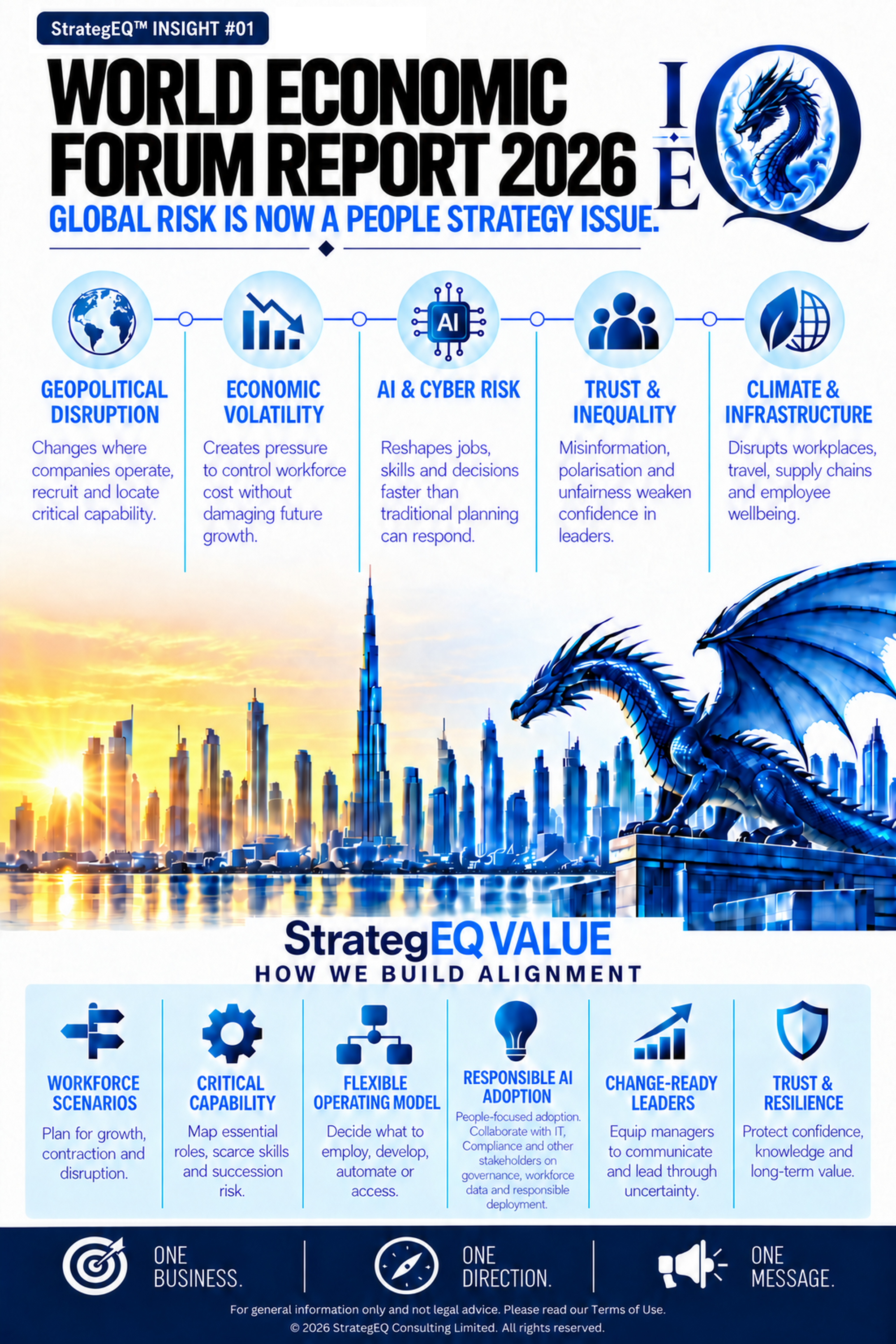
Explores how companies can prepare their workforce for technological, economic and geopolitical uncertainty.
More than twenty years in People leadership has taught me that People challenges rarely sit neatly in one box. Growth affects structure. Structure affects leadership. Leadership affects performance, reward, retention and risk.
StrategEQ Insights distils the patterns, lessons and emerging issues I see across companies at different stages of growth and change. Each Insight turns a complex question into clear commercial context and practical action.
No theory for theory’s sake. Just straightforward thinking to help companies make better People decisions, earlier.
Showing 30 insights
Explores how companies can prepare their workforce for technological, economic and geopolitical uncertainty.
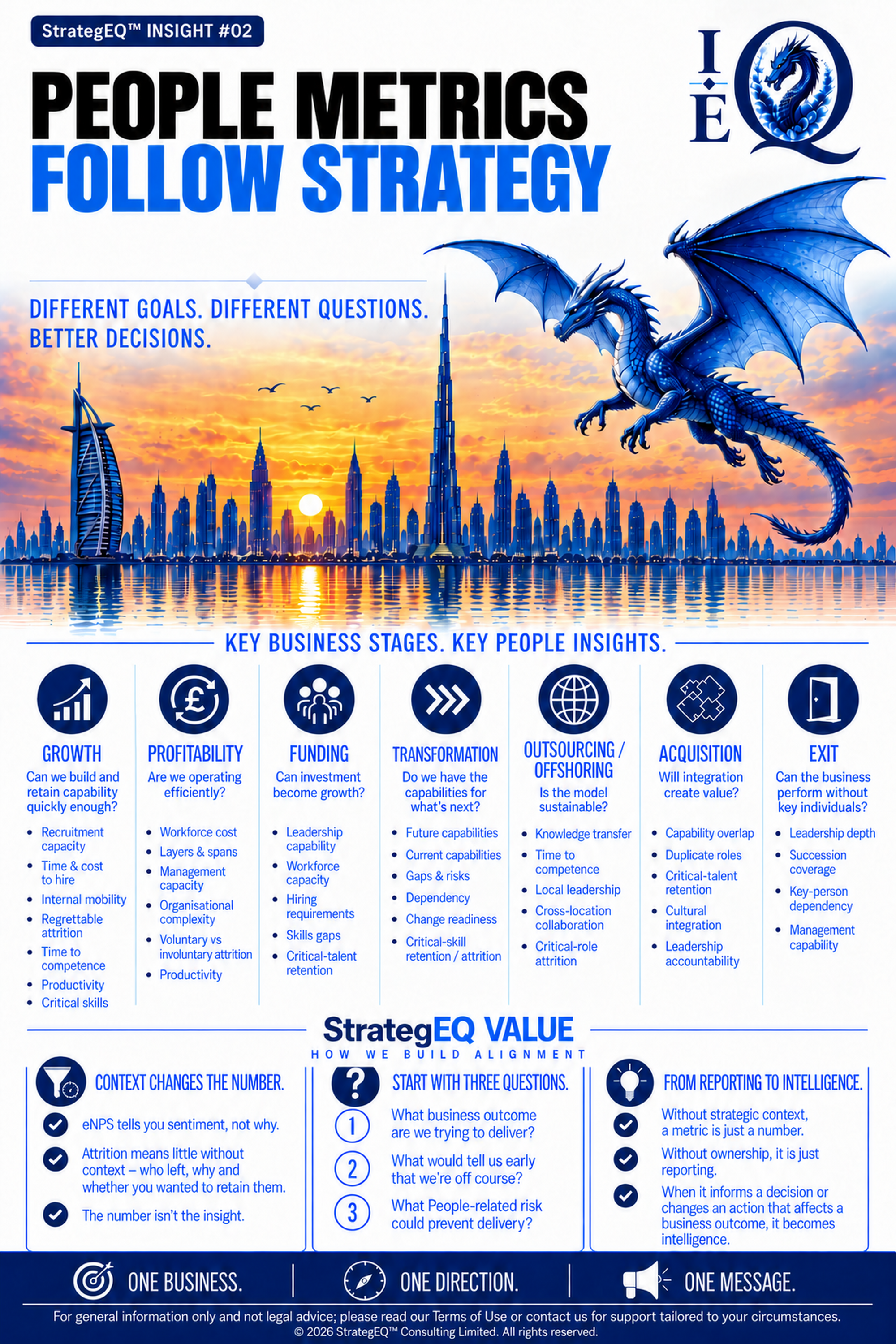
Explains why People measures should follow business priorities and support decisions rather than report activity.
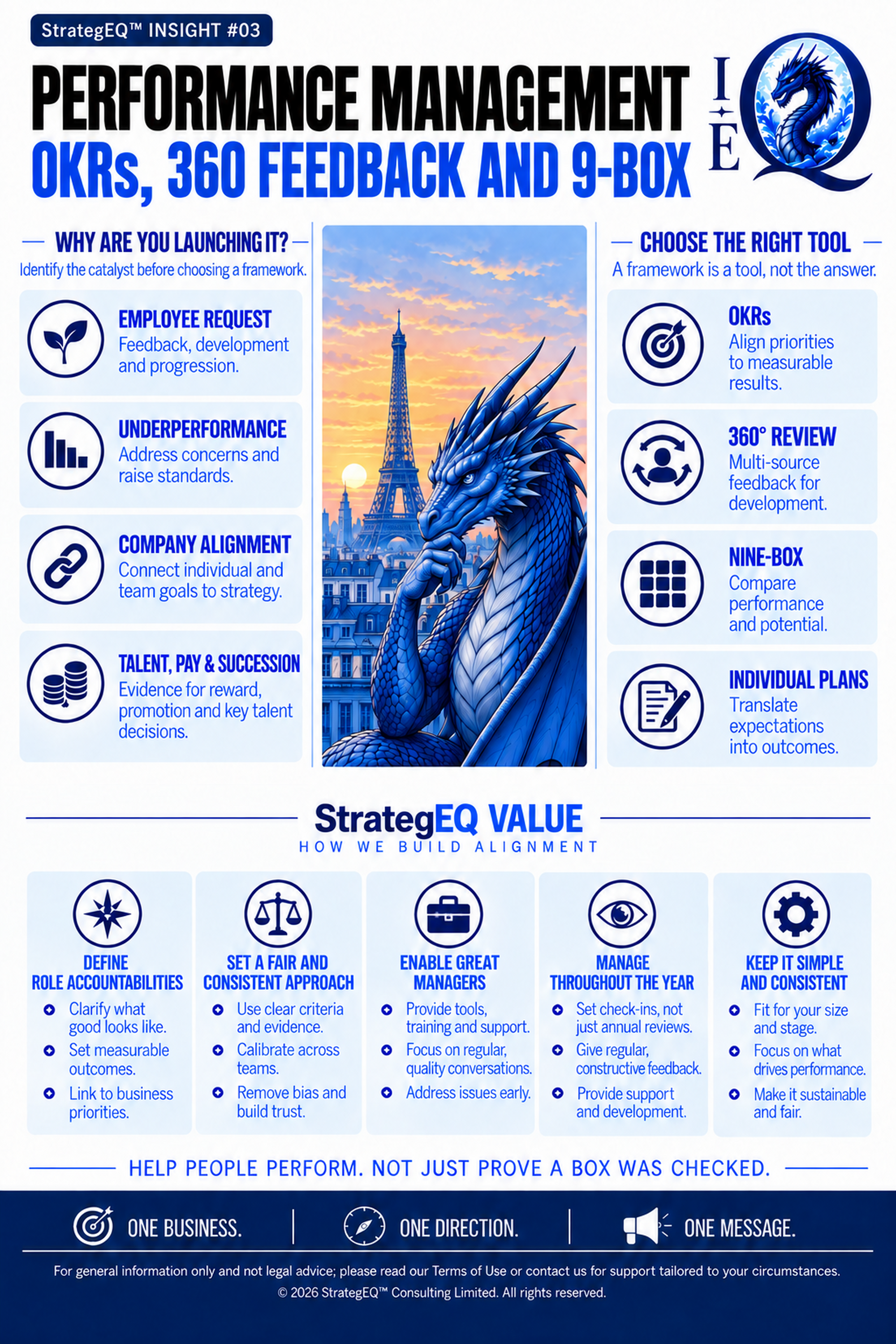
Shows how objectives, feedback and talent calibration can operate as one joined-up performance system.
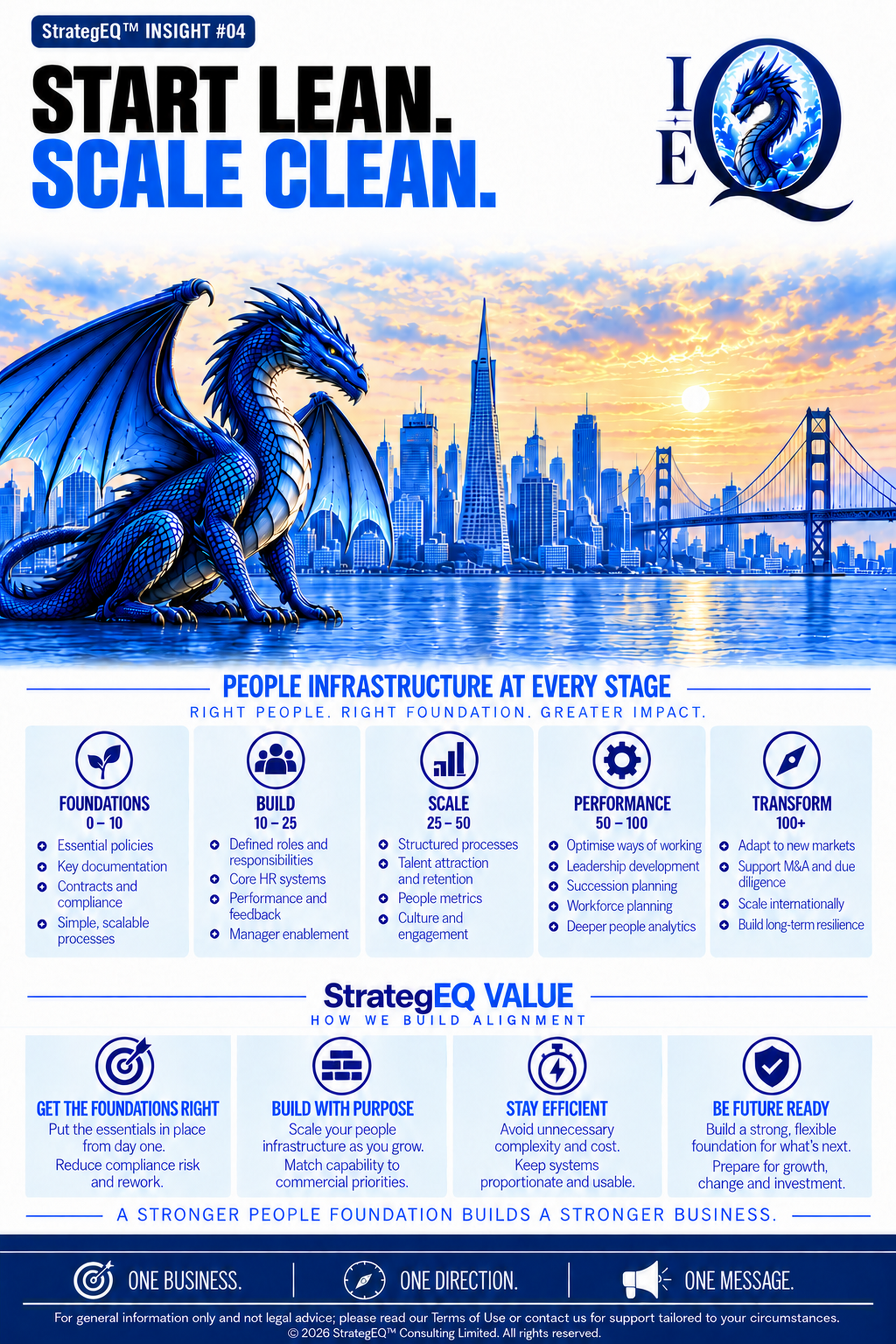
Sets out the proportionate People foundations companies need before growth creates avoidable complexity.
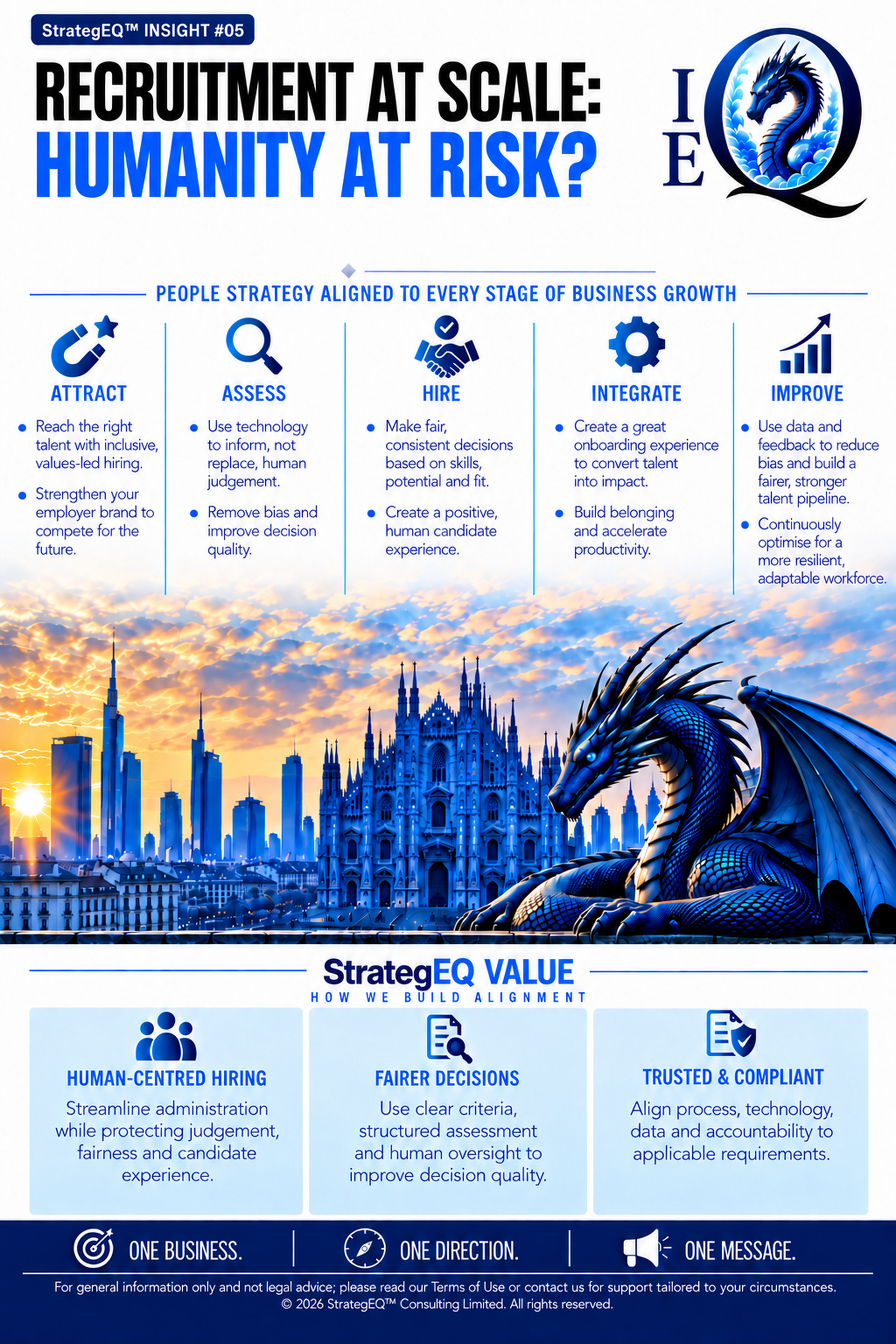
Makes the case for efficient recruitment technology with accountable human employment decisions.
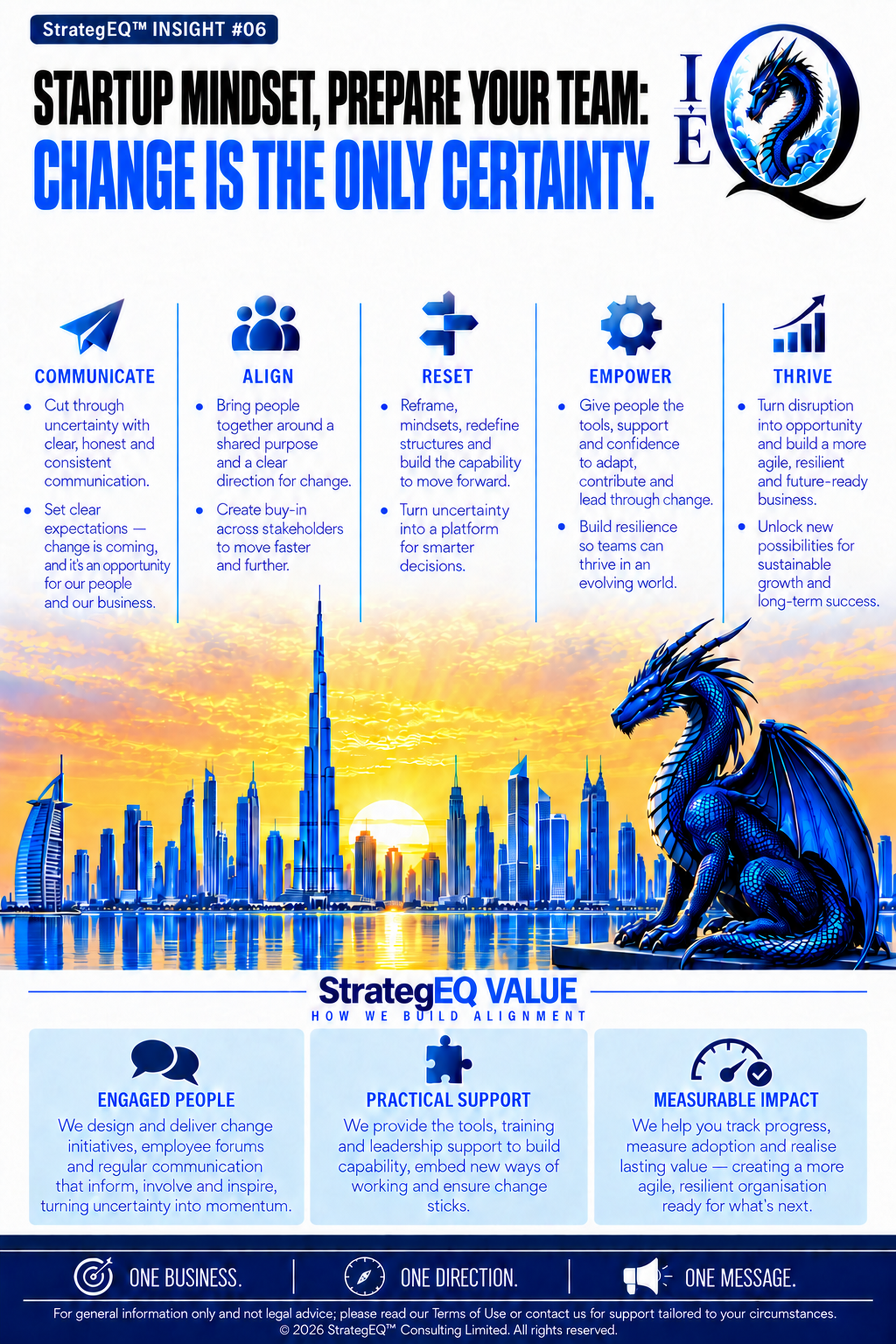
Positions organisational change capability as a continuing discipline rather than a one-off programme.
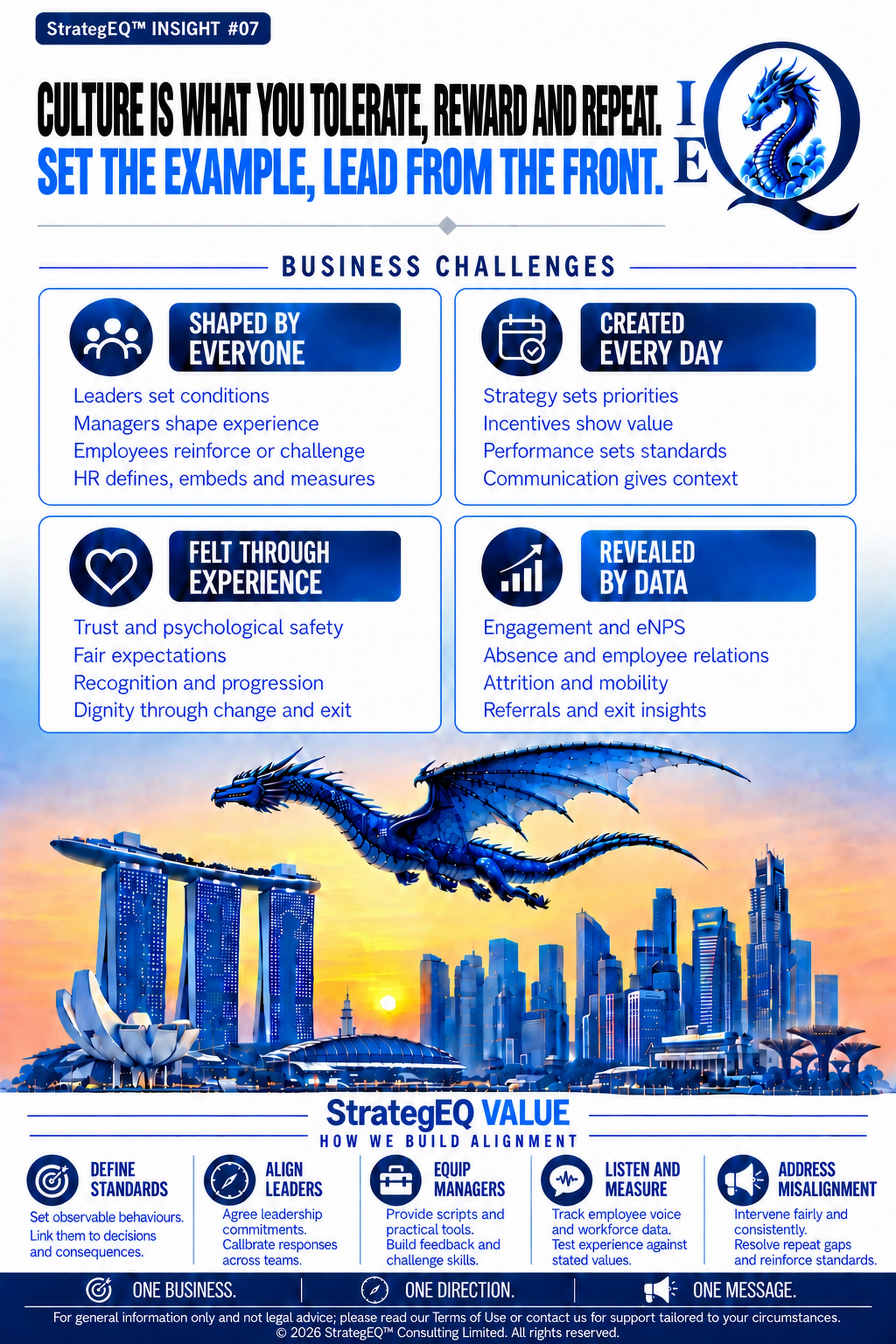
Explains how culture is created through what leaders demonstrate, reward, tolerate and challenge.
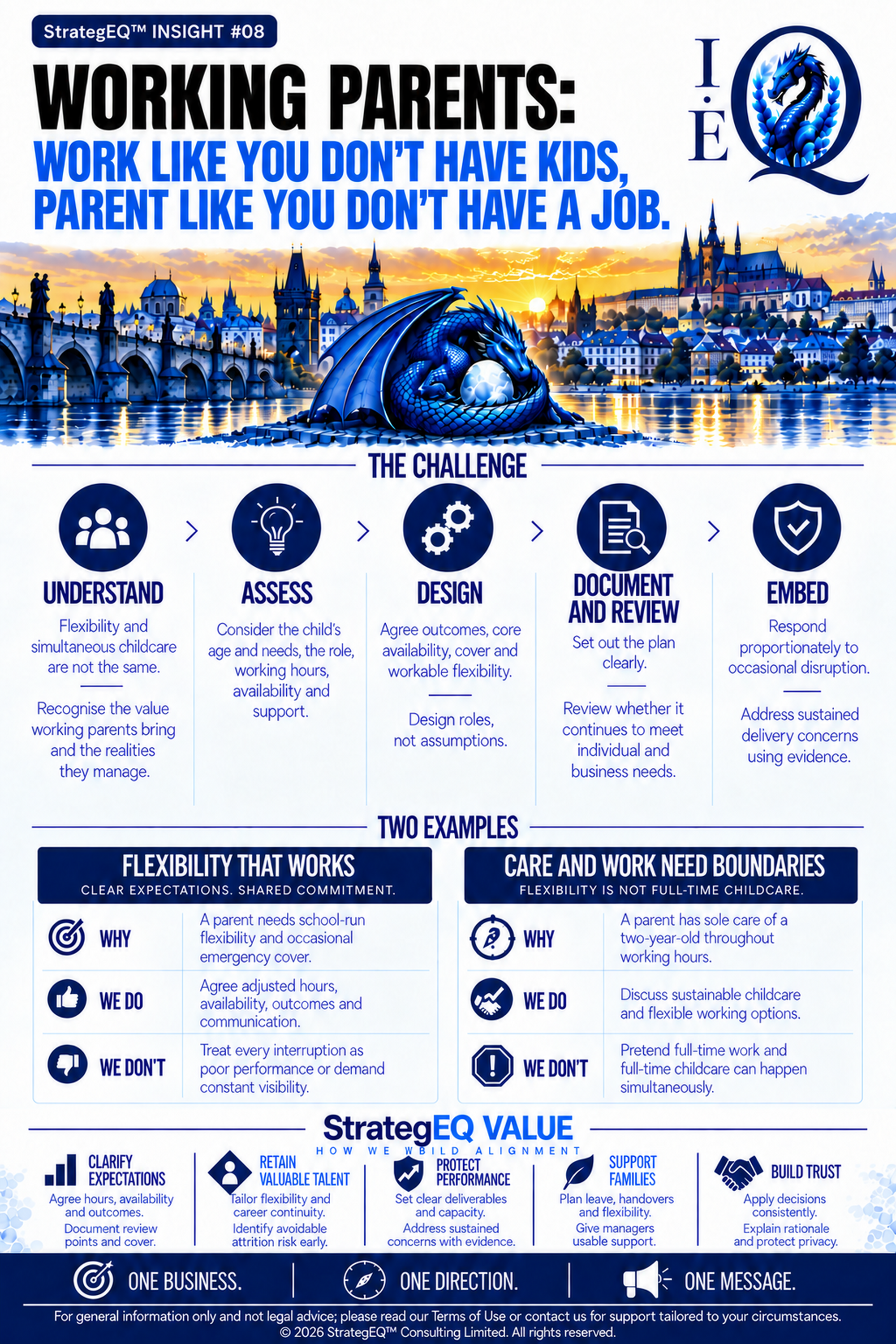
Challenges structural barriers that make work unnecessarily difficult for parents and carers.
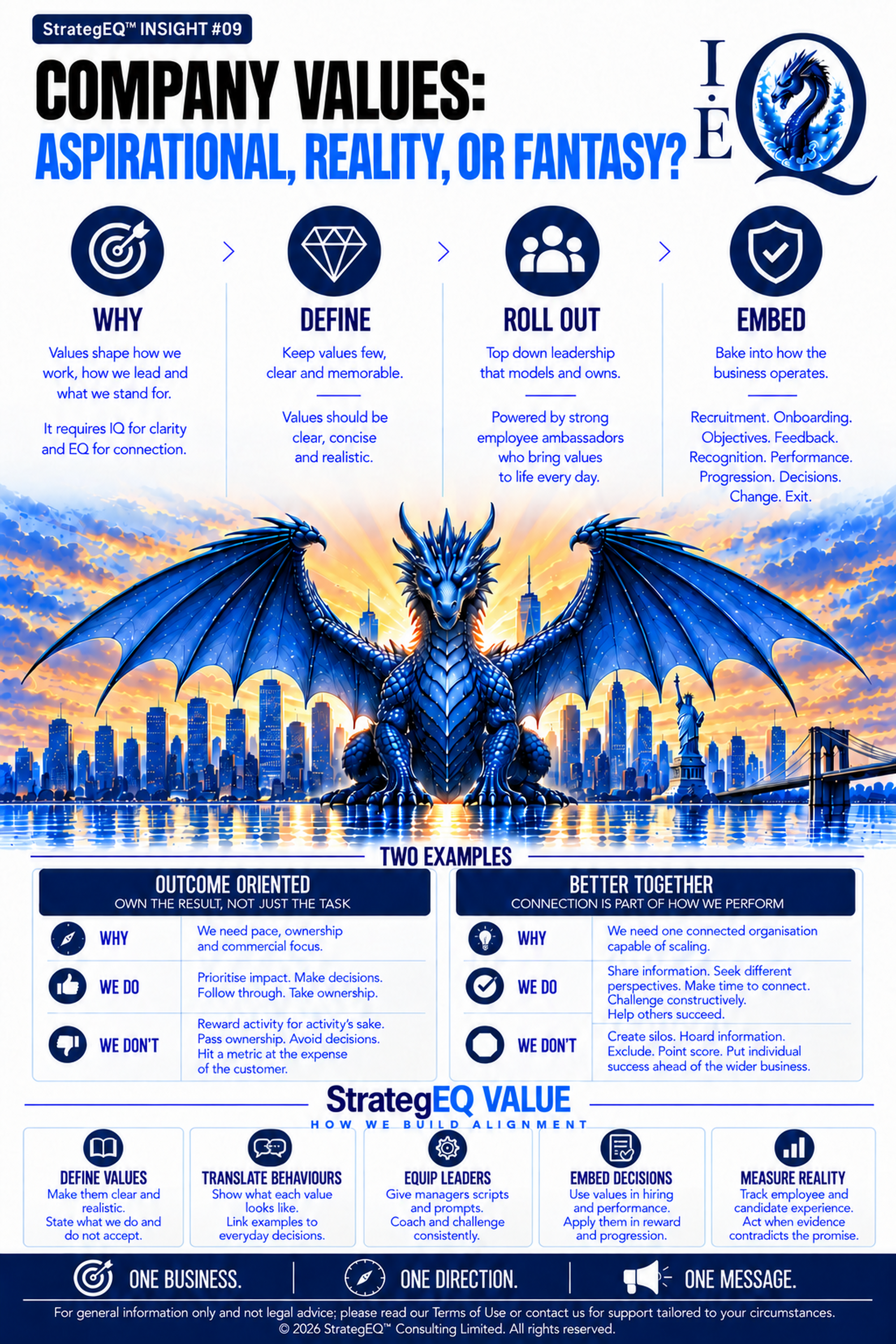
Tests whether stated values are visible in everyday behaviour, choices and consequences.
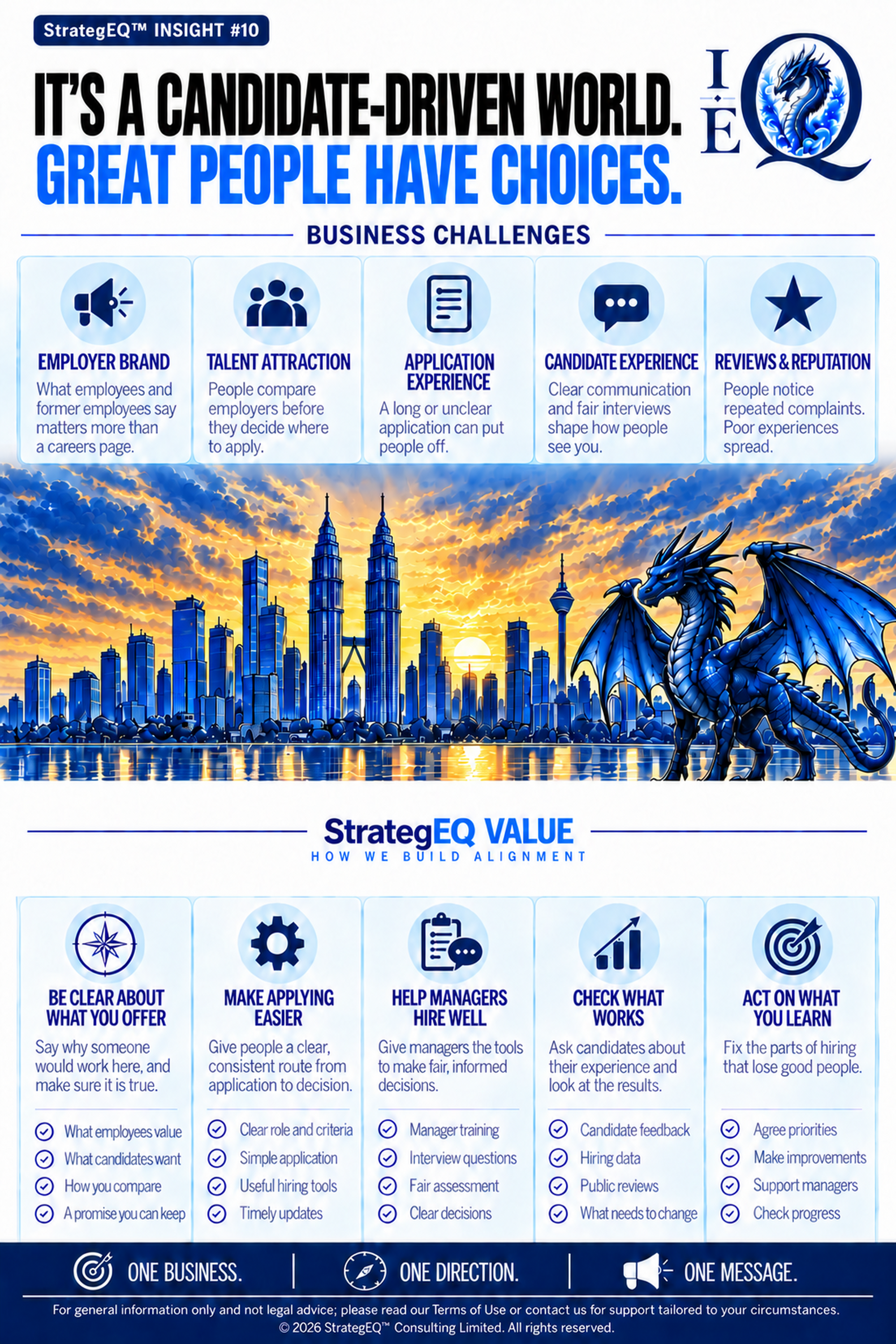
Explores why strong candidates choose one company over another and where attraction breaks down.
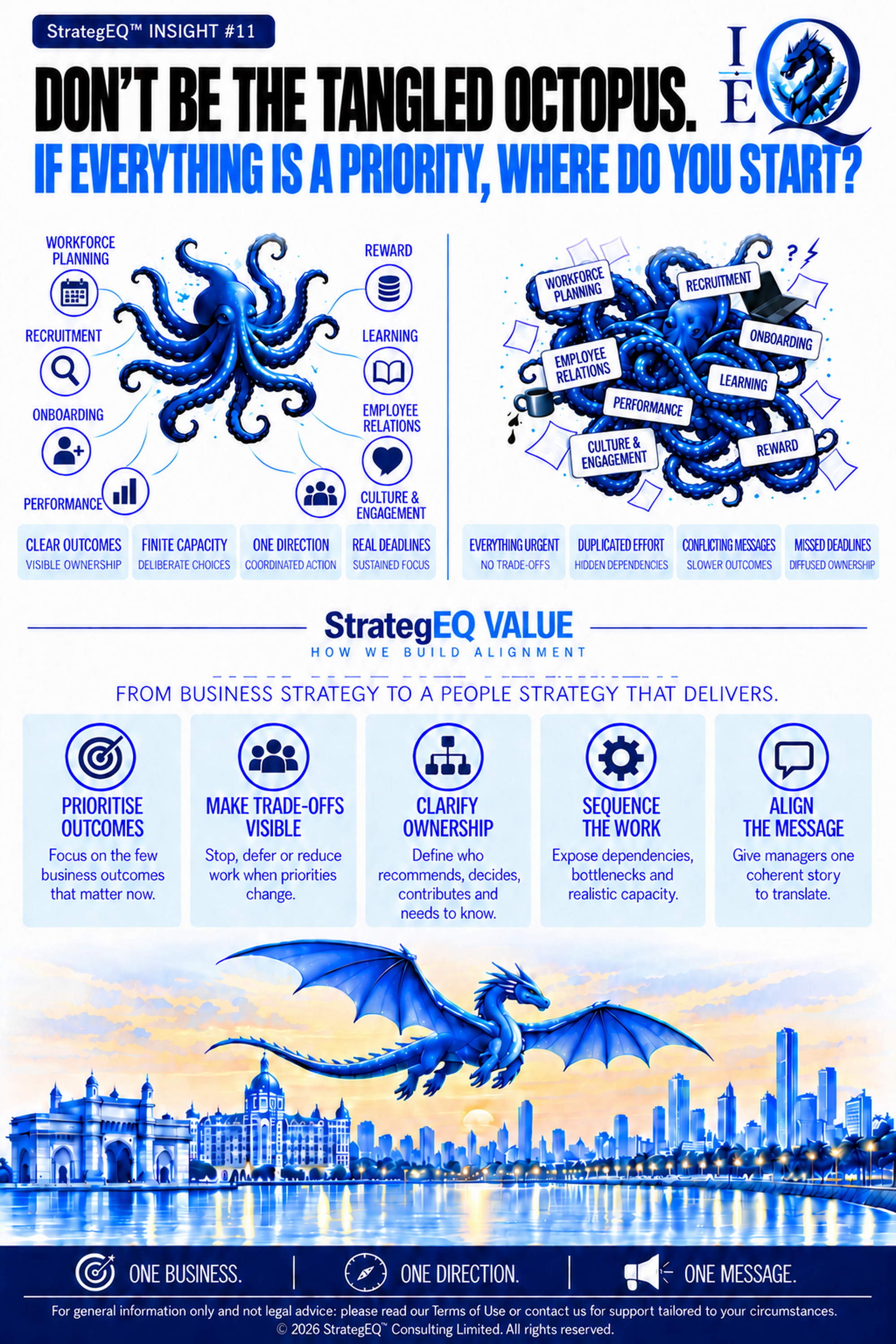
Uses the octopus metaphor to expose fast but fragmented growth and unclear alignment.
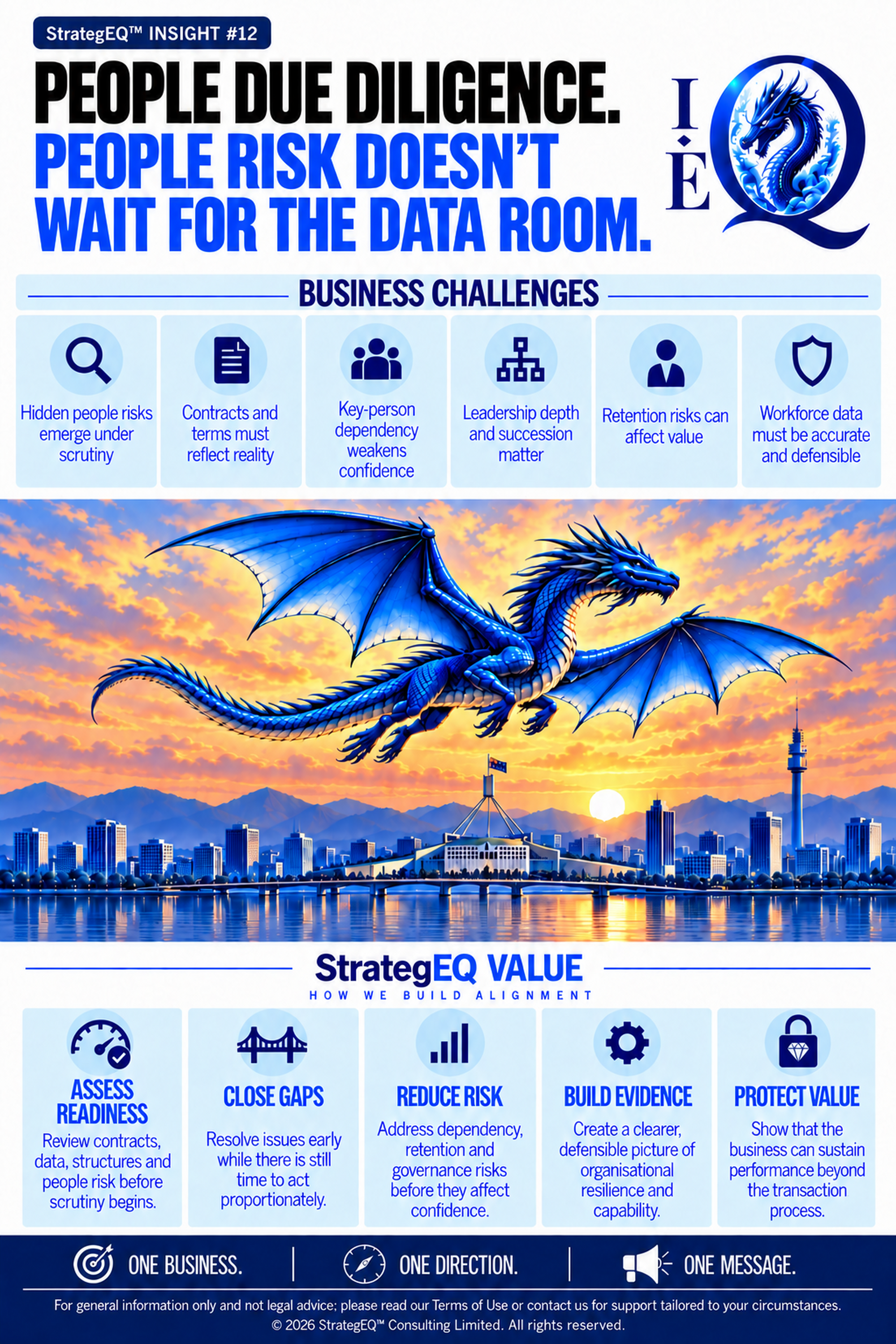
Explains why People evidence, liabilities and risks must be addressed before the data room opens.
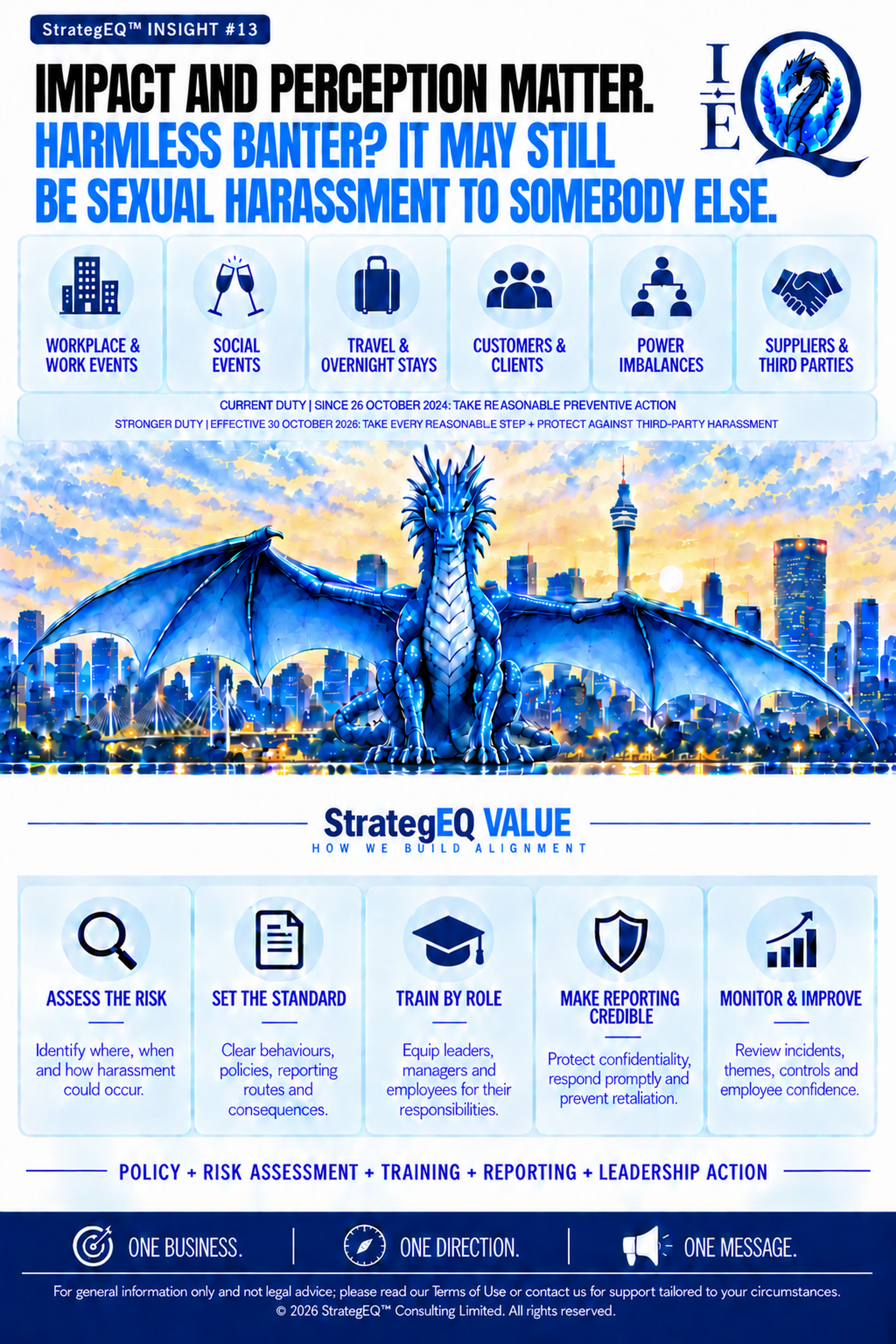
Moves employers from policy ownership to risk assessment, prevention, reporting and intervention.
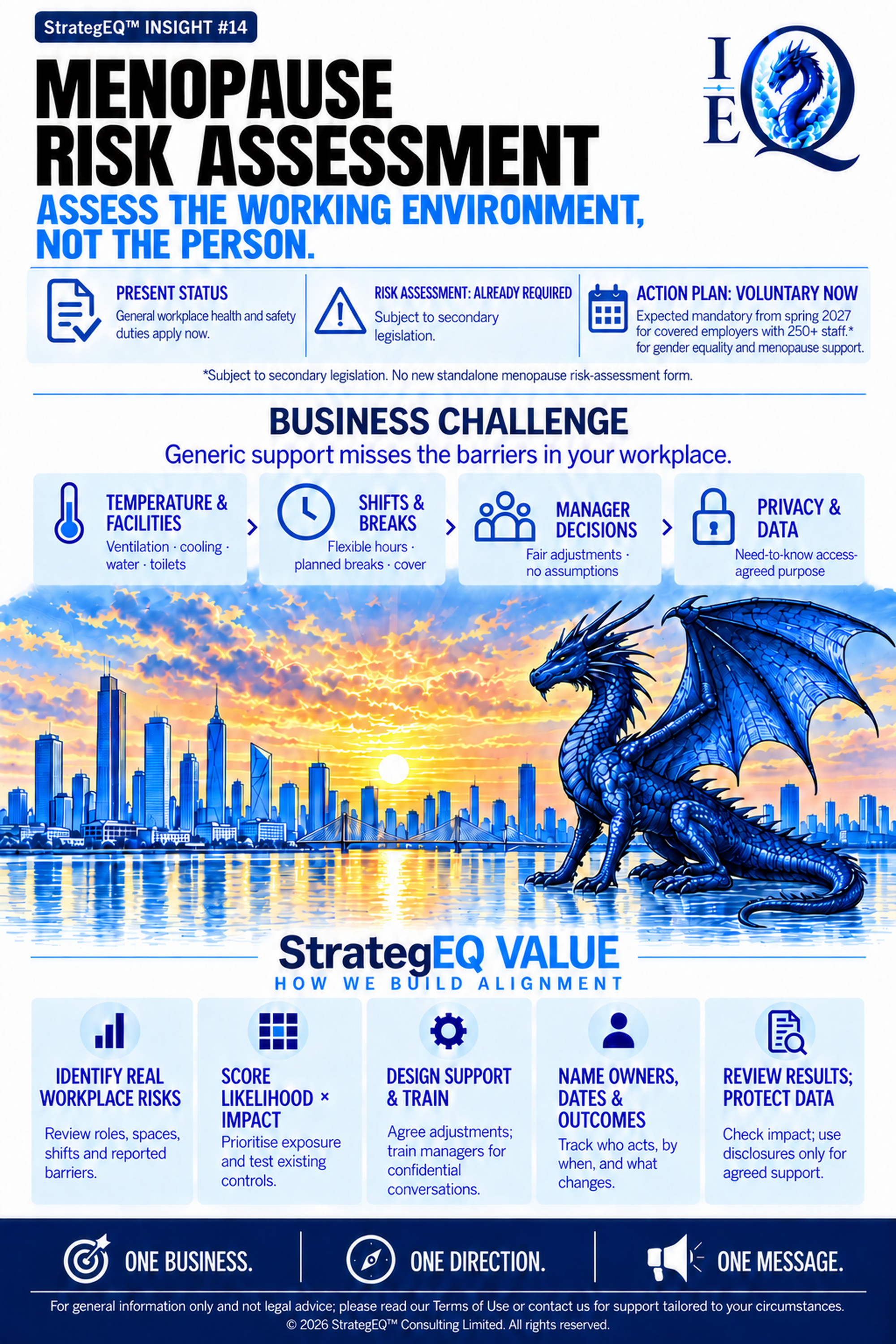
Explains why executive appointments must be made for the company’s next stage, not only its present needs.
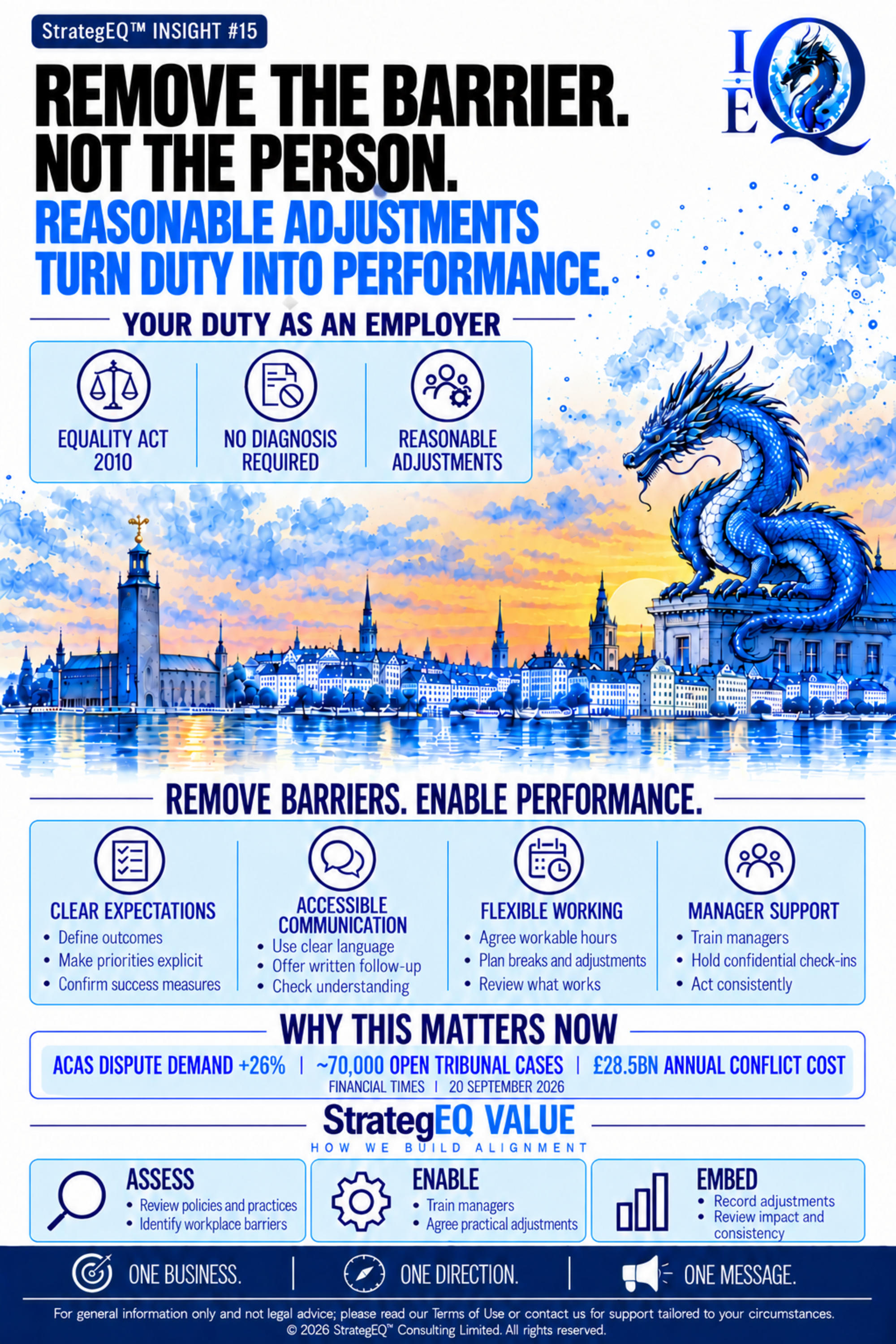
Focuses on removing process, communication and environmental barriers to neurodivergent capability.
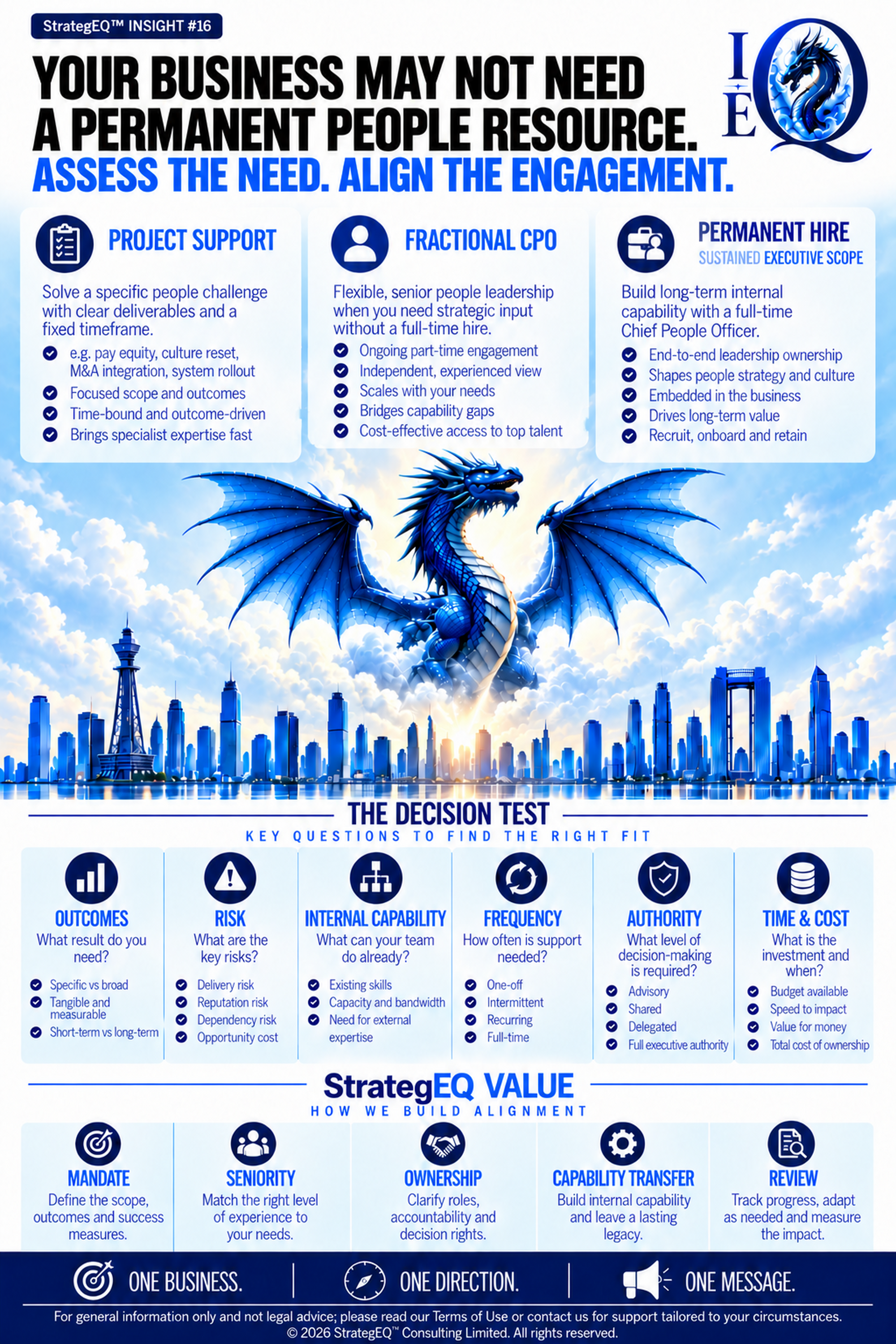
Translates investment into practical leadership, capability, governance and workforce priorities.
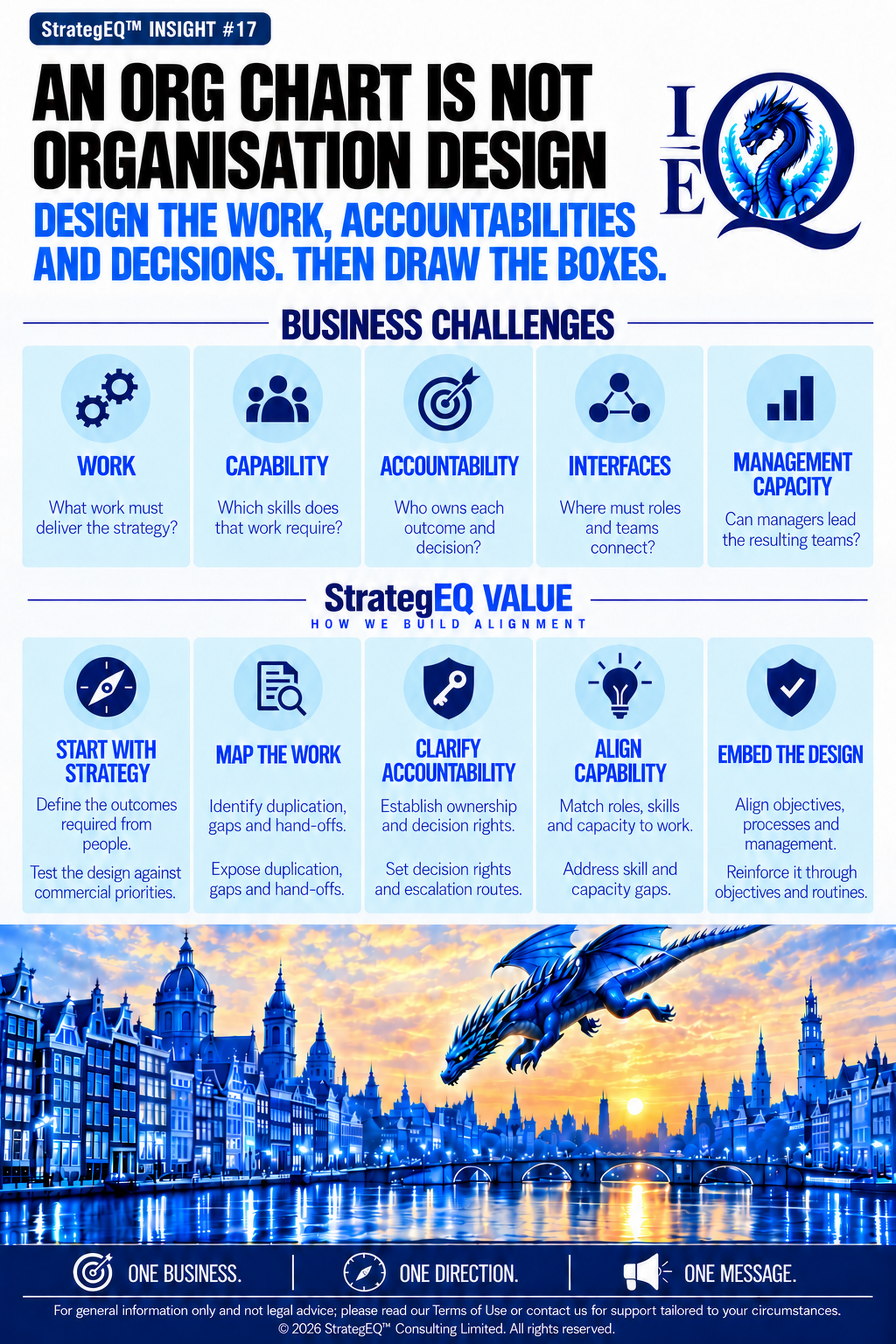
Distinguishes reporting lines from the accountabilities, capabilities and decisions needed to deliver strategy.
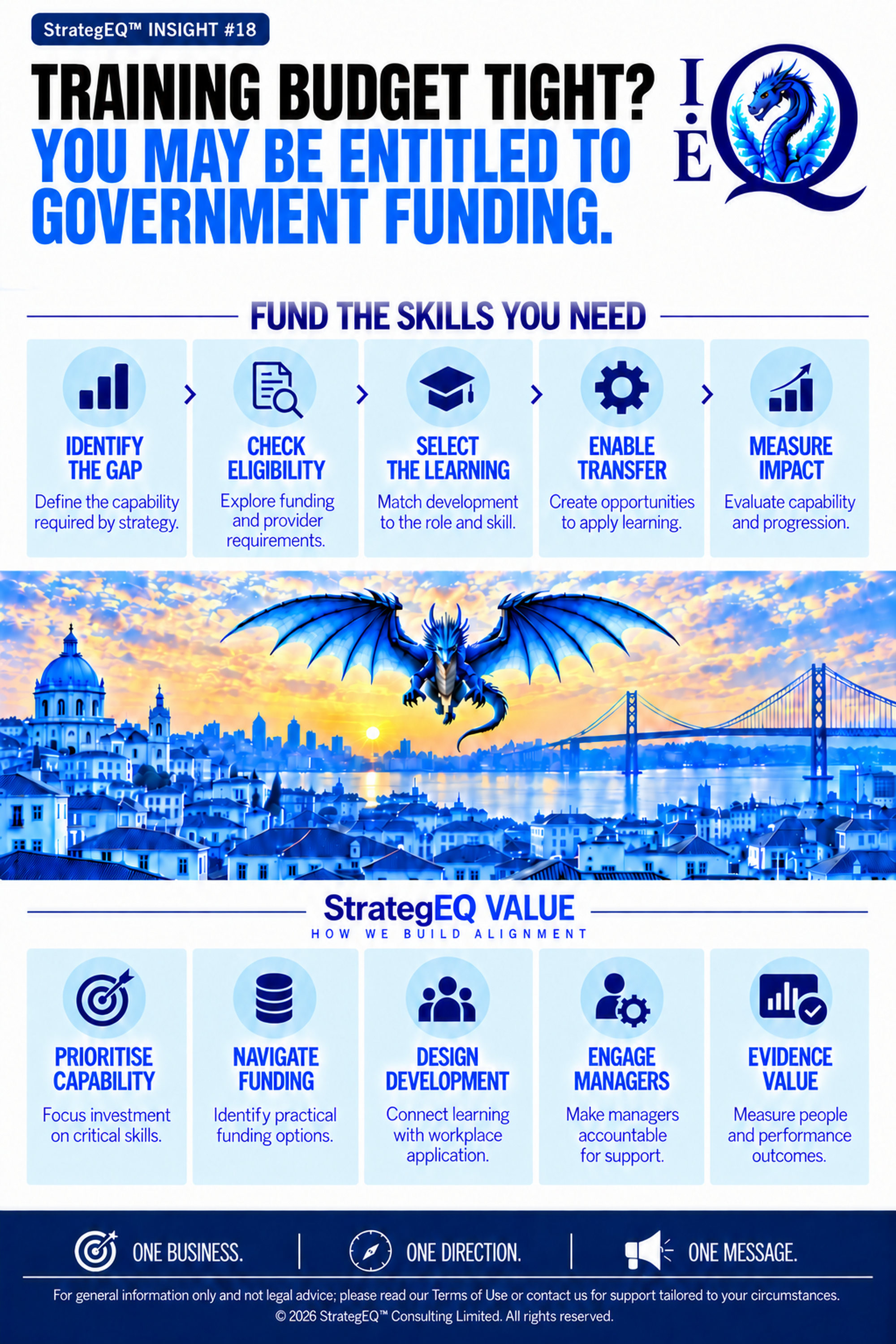
Shows companies how to use apprenticeships, bootcamps, levy transfers and other funded training routes.
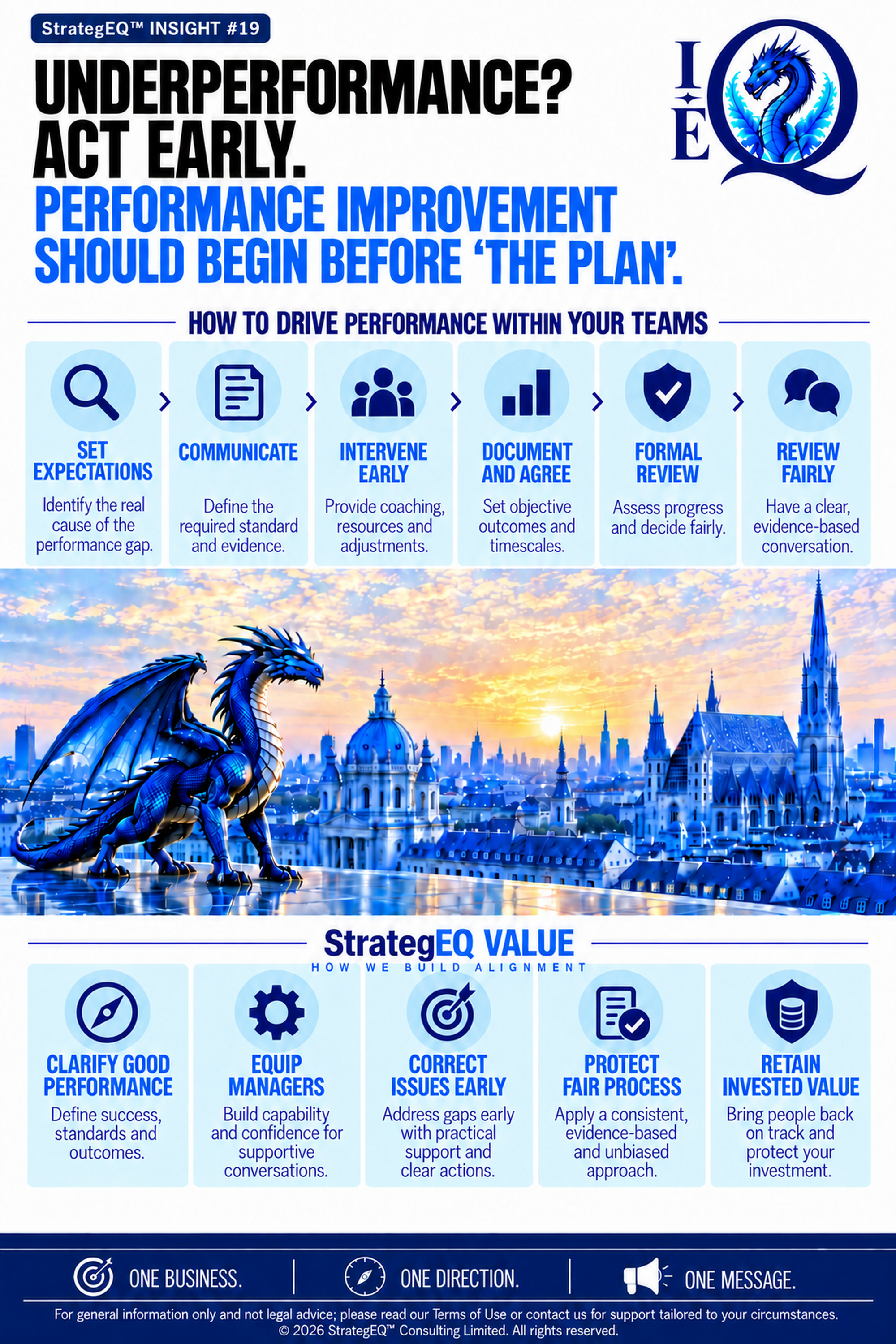
Sets out a fair, evidence-based approach to expectations, support, review and underperformance decisions.
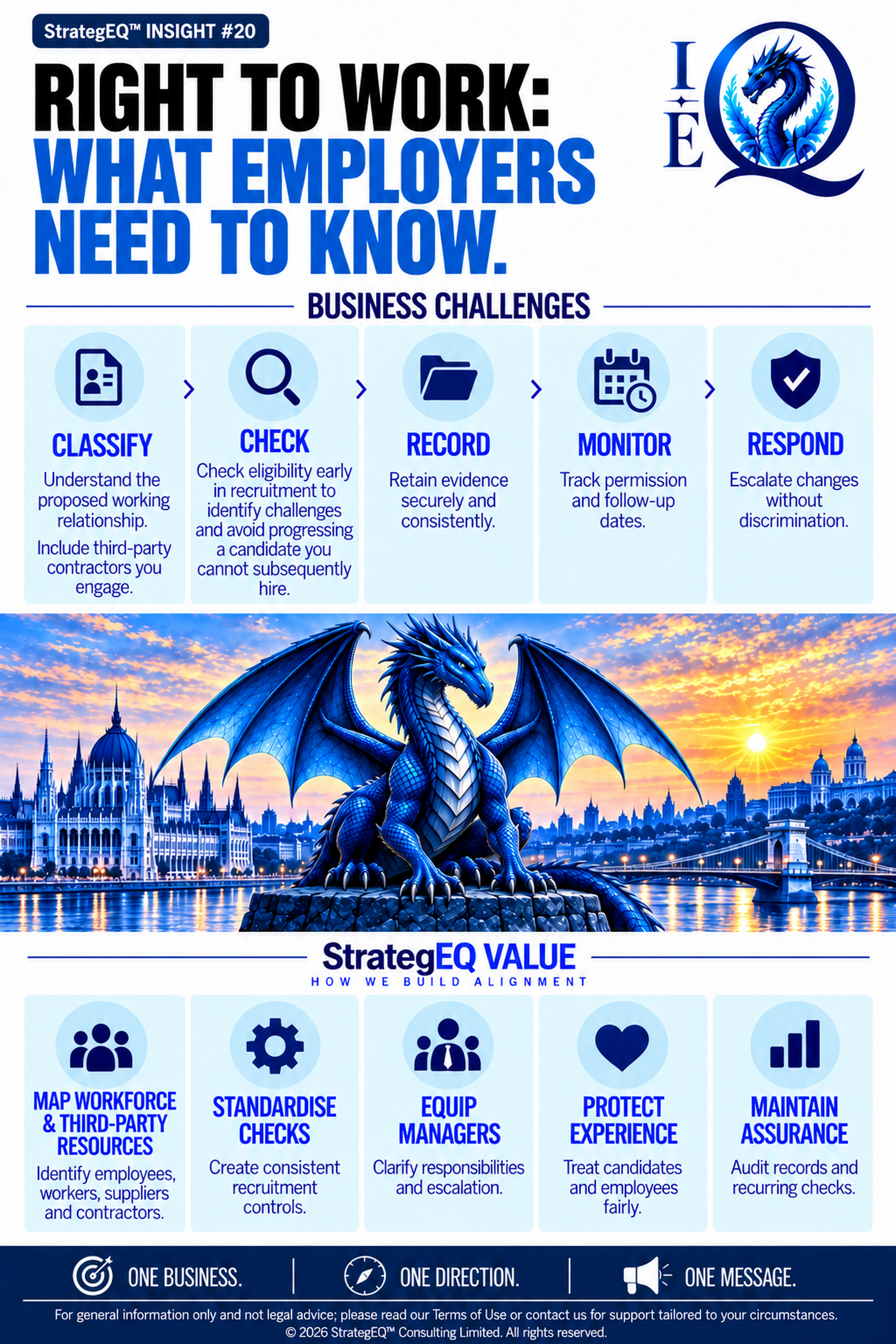
Explains employer checks, evidence, contractor exposure and the risks around substitution arrangements.
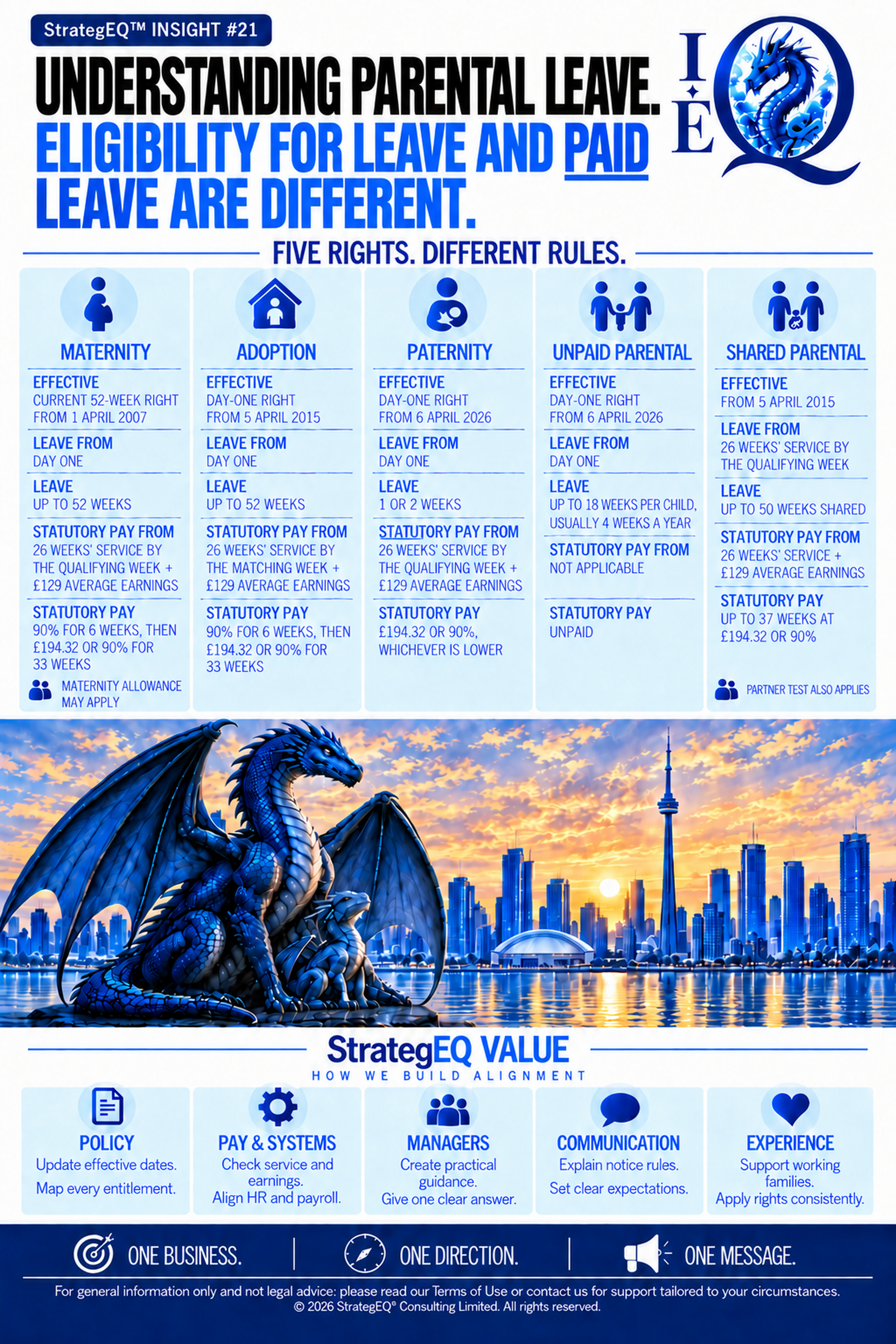
Clarifies the distinction between leave rights and separate statutory-pay eligibility requirements.
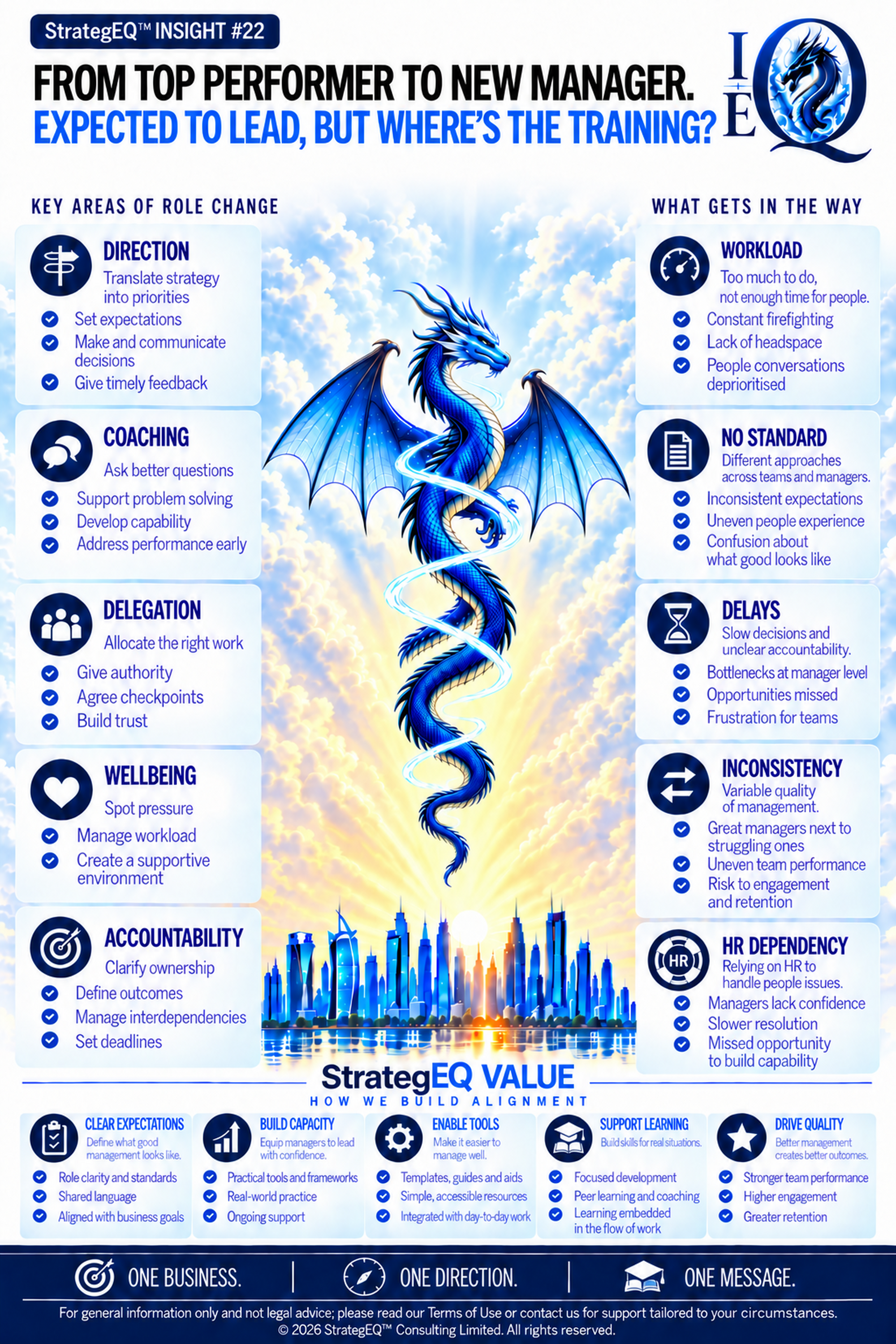
Explains why companies need psychological safety and employee listening before people decide to leave.
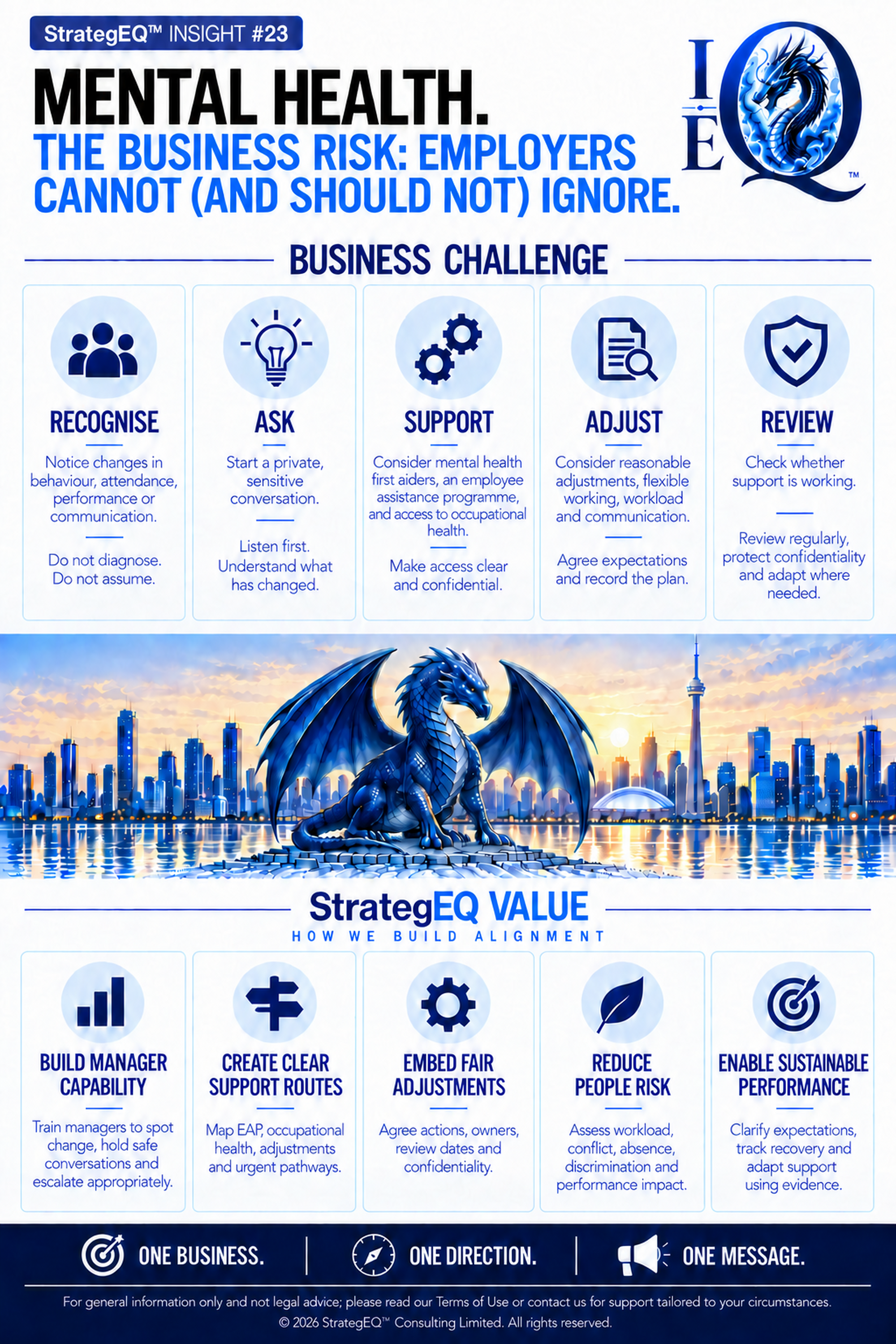
Connects hidden personal pressures with practical employer support, referral routes and manager capability.
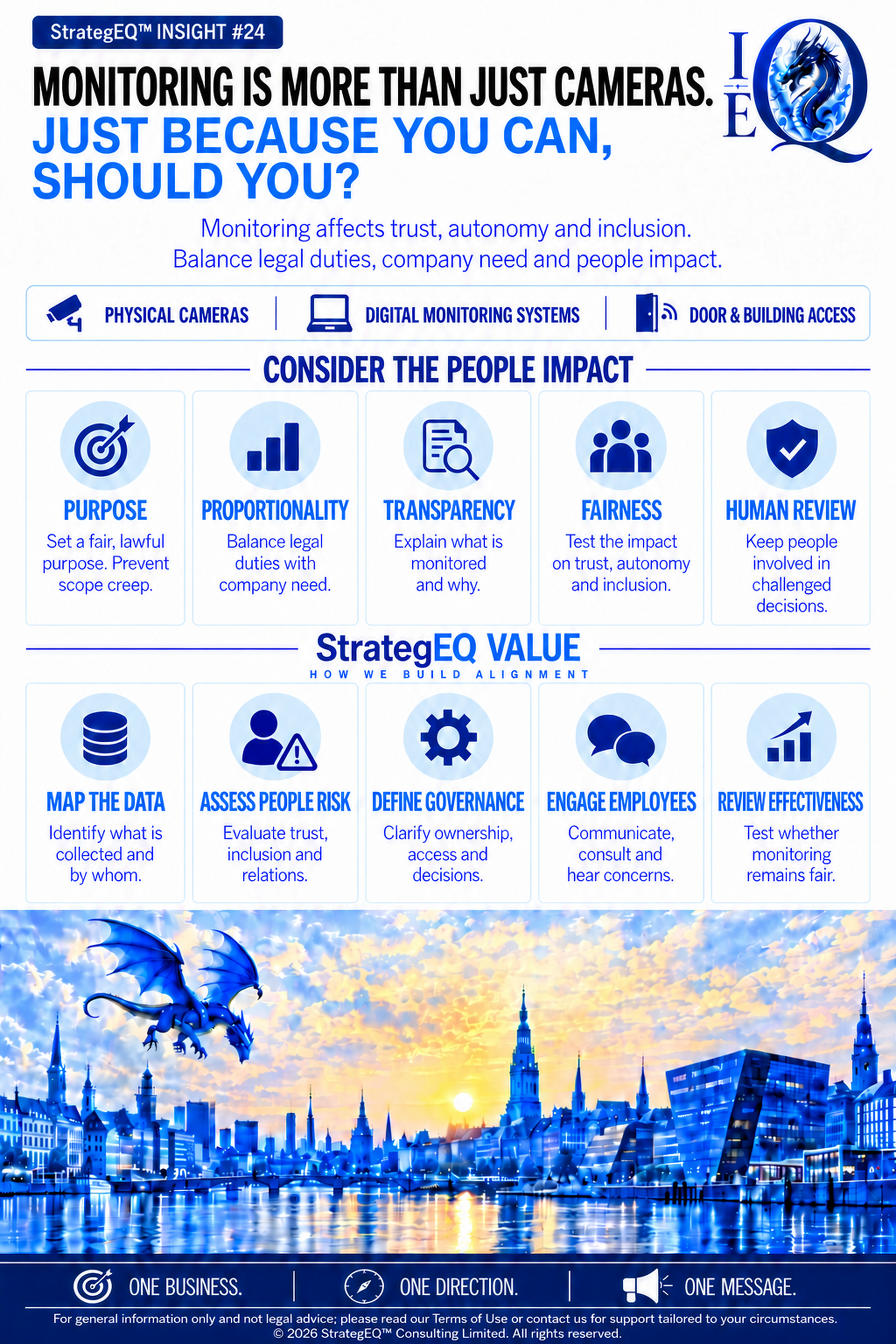
Balances business need with privacy, transparency, consultation and data-protection responsibilities.
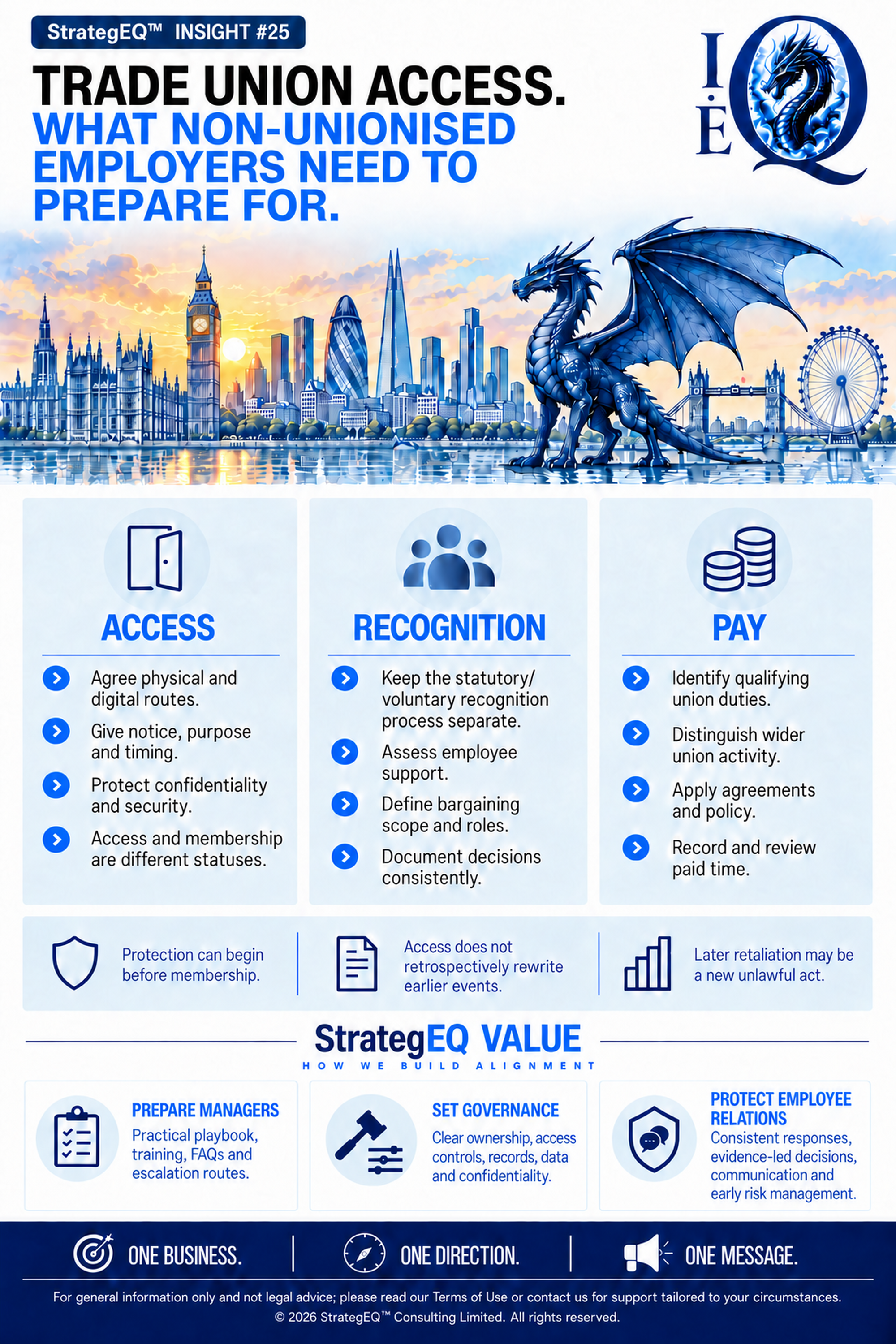
Explains changing access rights, worker protections and the practical arrangements employers should prepare.
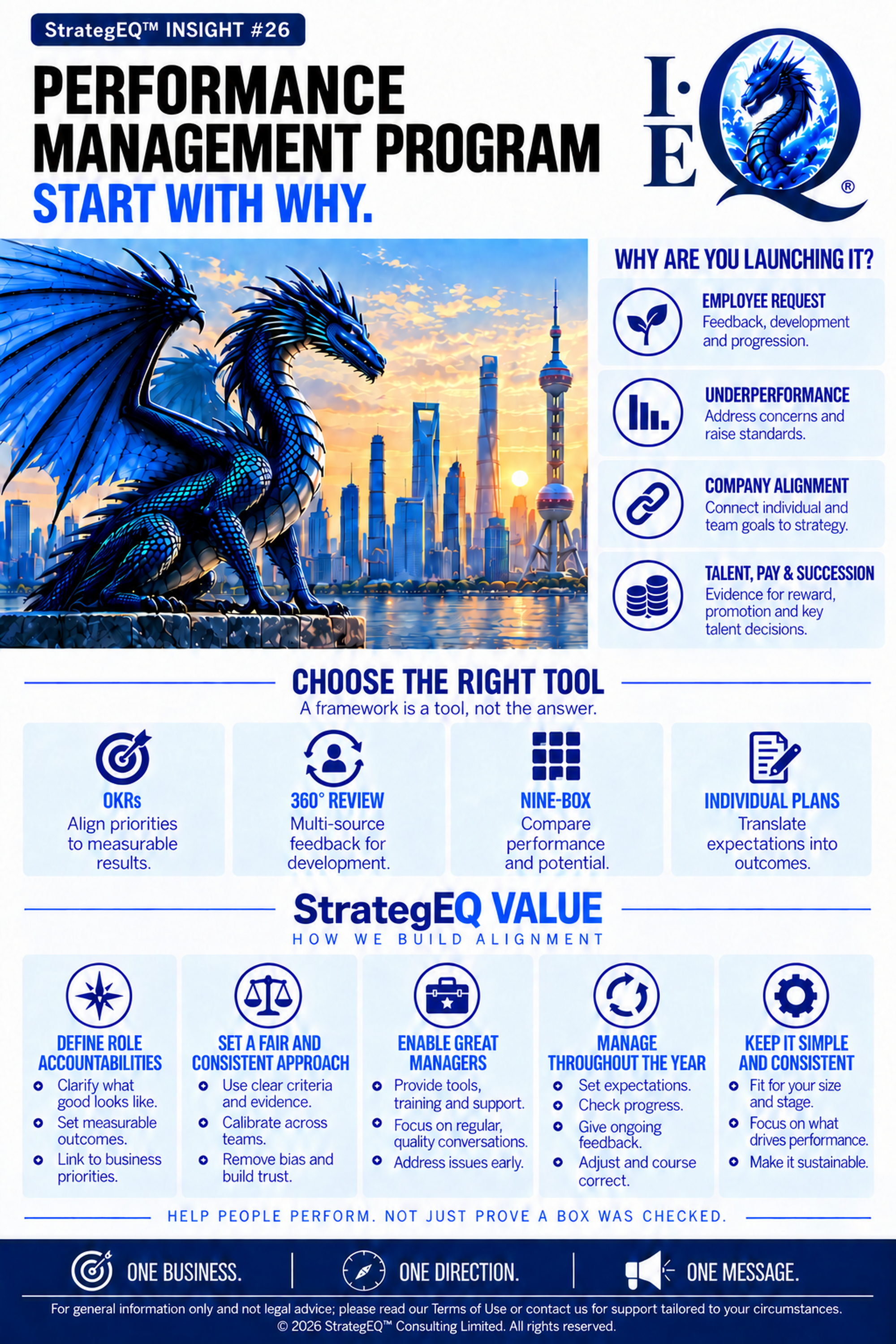
Connects People priorities and activity to company purpose, direction and commercial strategy.
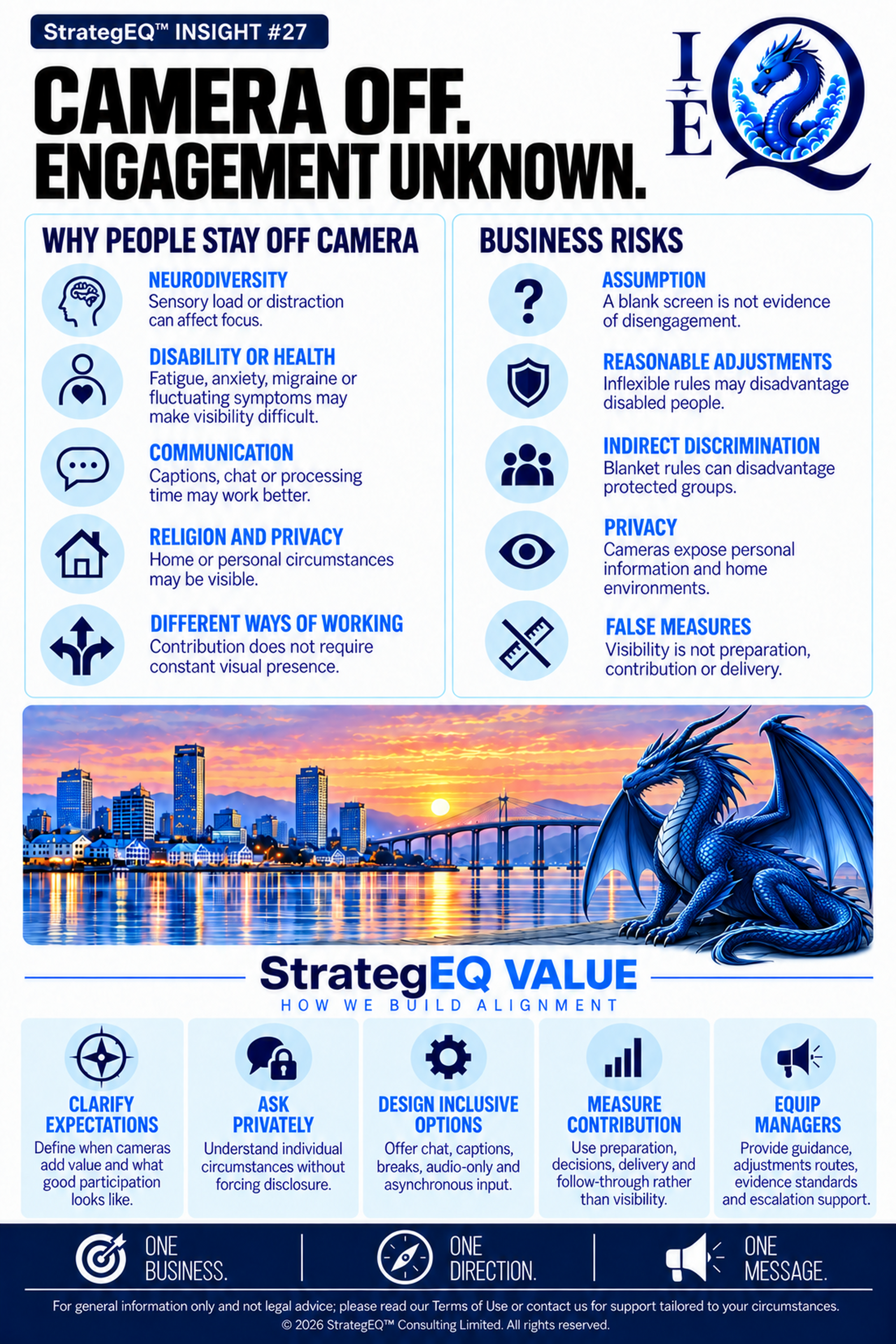
Examines whether the People model can support growth and withstand investor examination.
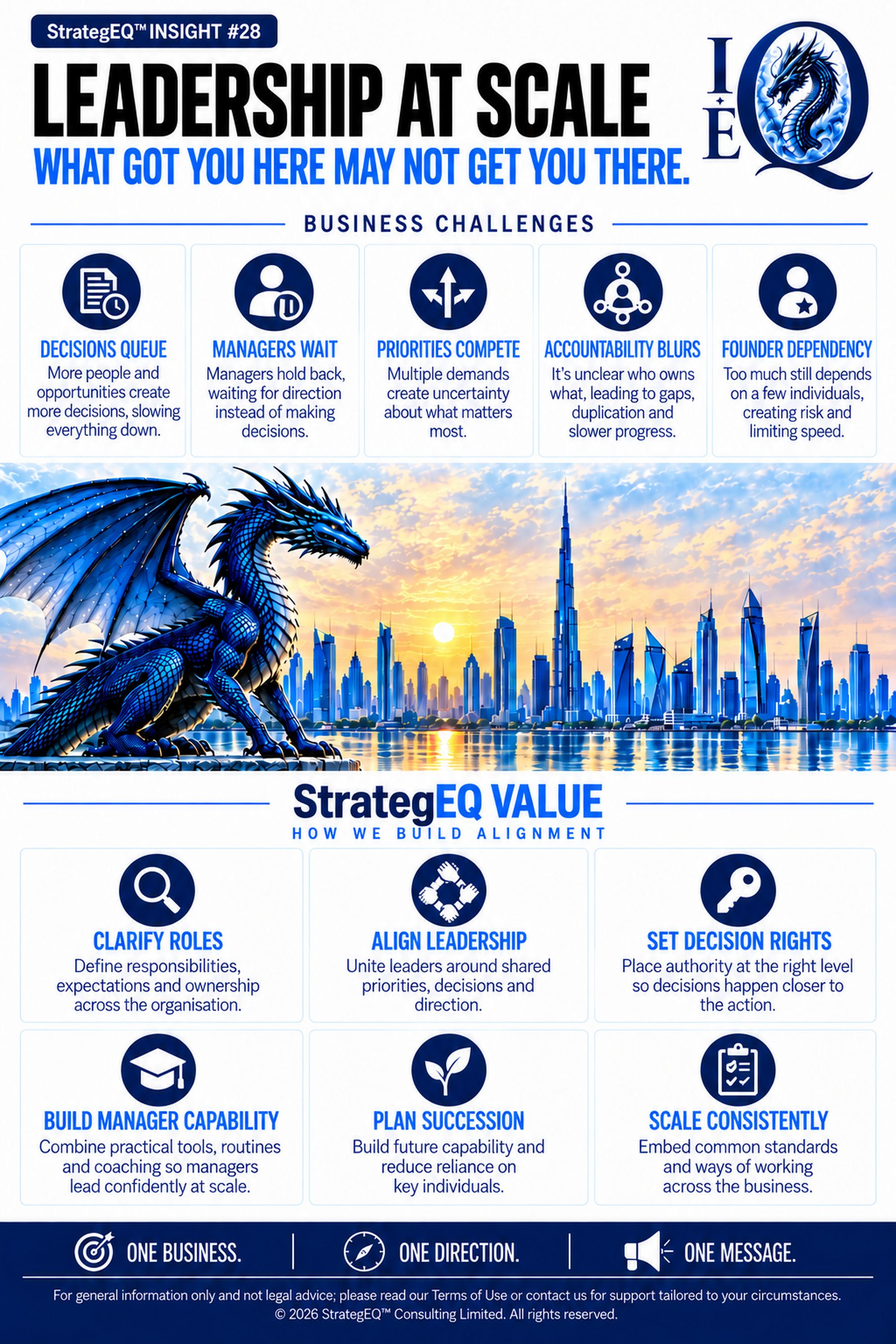
Explores how leadership capability must change as complexity, pace and headcount increase.
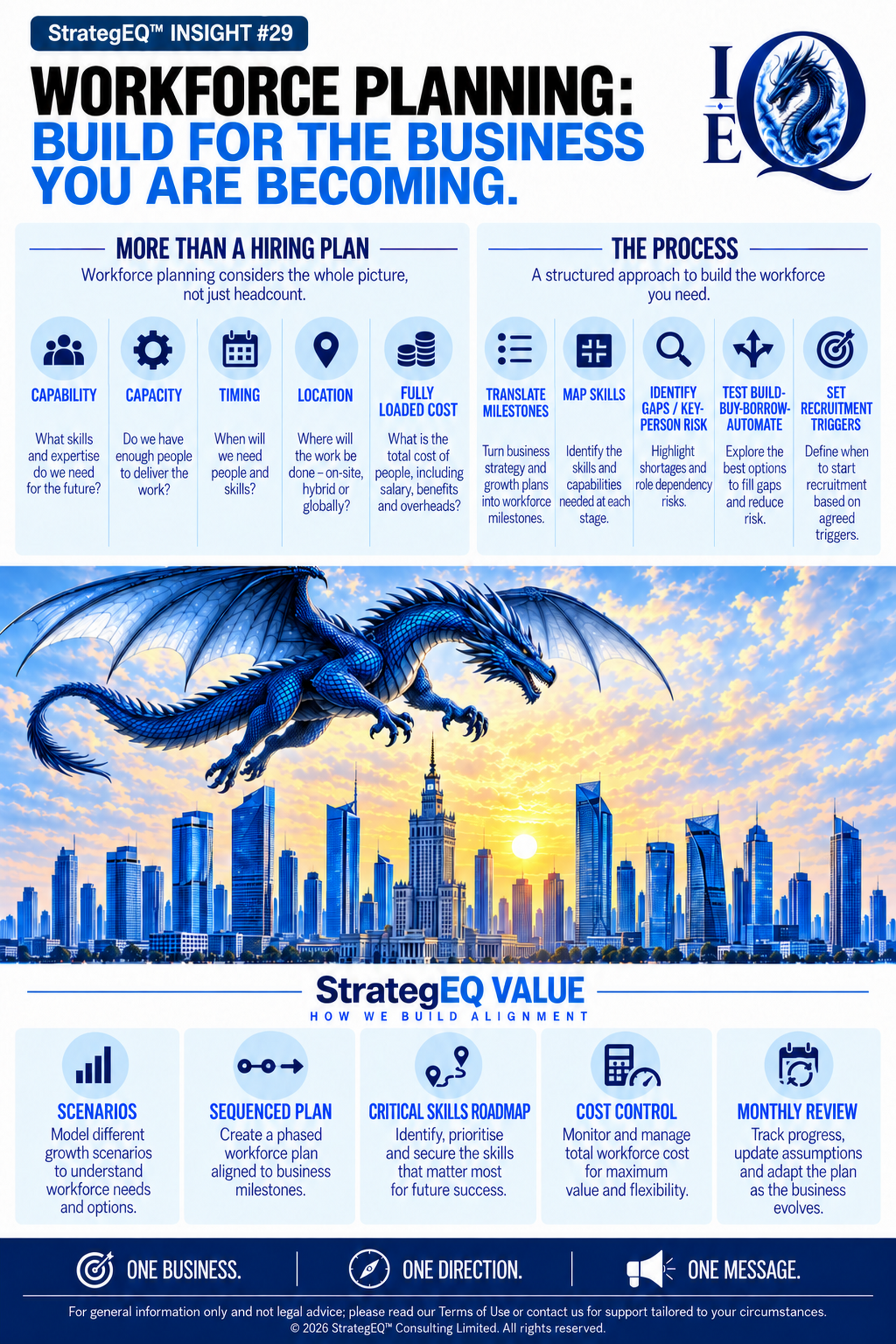
Shows how strategy should translate into future roles, skills, capacity, location and cost.
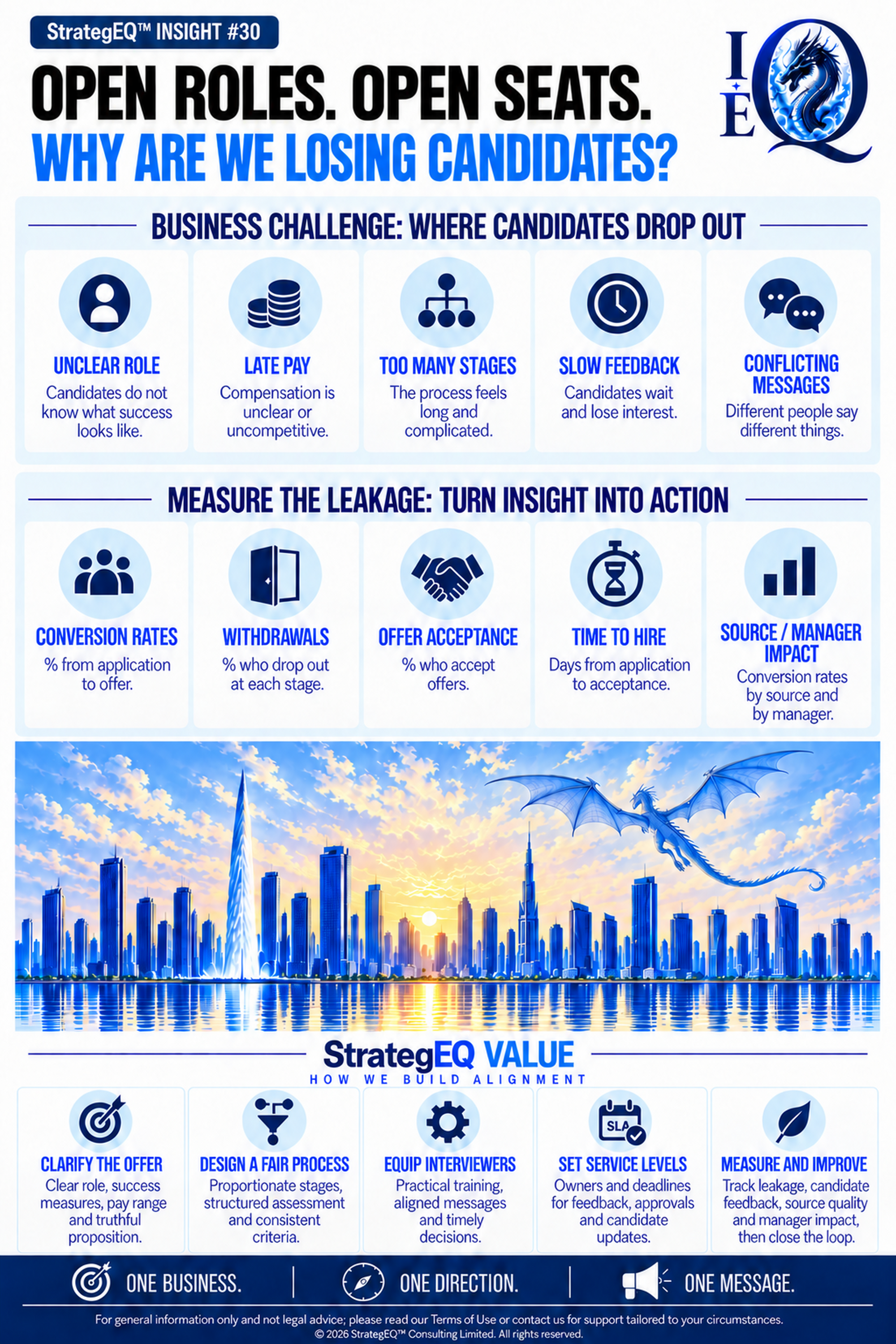
Identifies the proposition, process, pace and decision points that cause candidate loss.
Receive new StrategEQ Insights and practical perspectives by email.