
Approx. 2-minute read
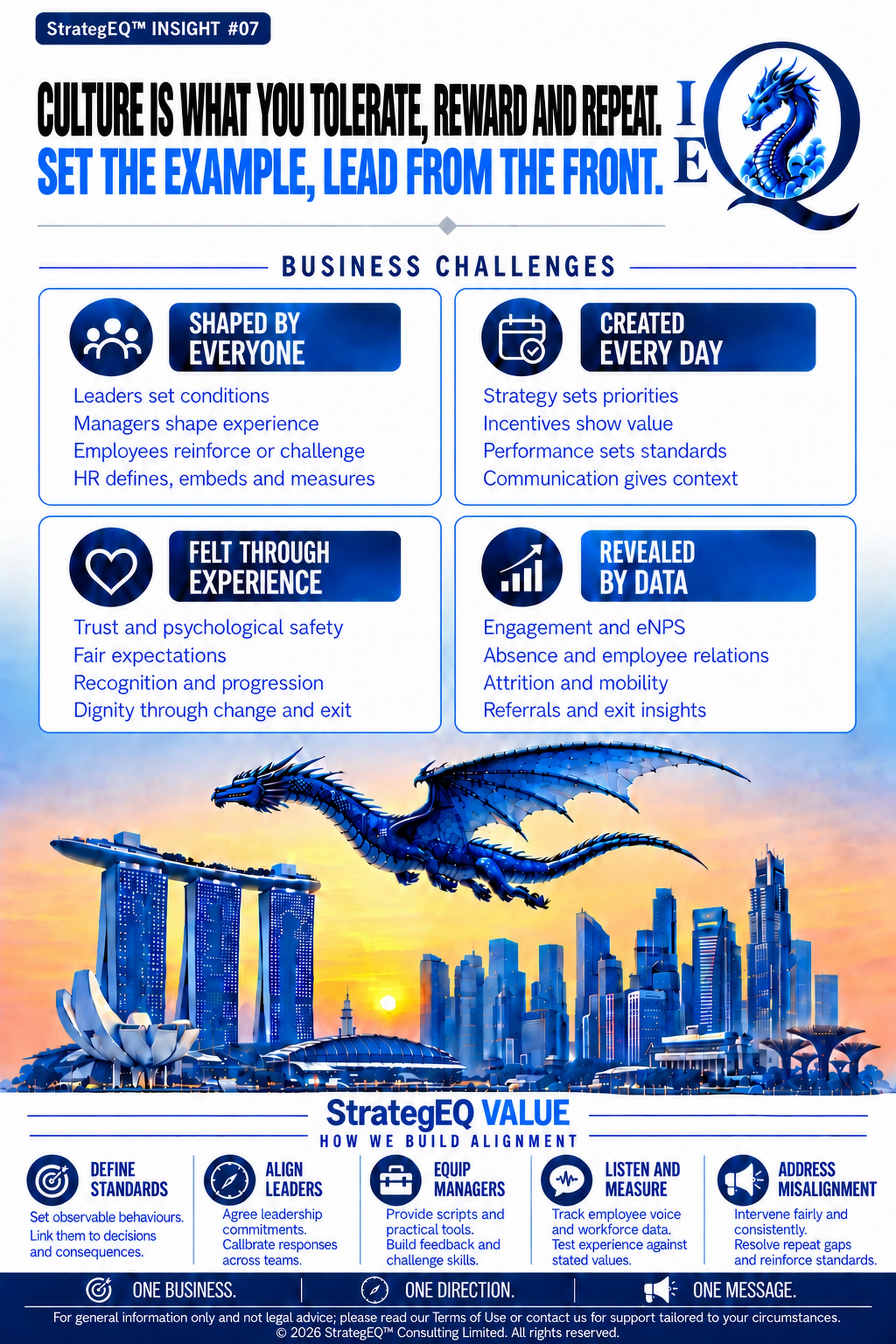
TL;DR: Culture is a pattern of decisions and behaviours. It has commercial consequences when those patterns help or hinder execution.
As a company grows, its founders can no longer explain every decision or correct every behaviour personally. Managers become the daily expression of the business. What they reward, tolerate and repeat shapes whether employees raise risks, work across teams, serve customers and stay long enough to build capability.
Begin with the strategy. A company entering a regulated market may need stronger escalation and control. One moving from founder-led sales to repeatable delivery may need clearer handovers and accountability. The relevant question is which behaviours will help the business deliver its next stage, and which will put cost, quality or trust at risk.
Compare the stated standard with real decisions. Who is hired, promoted and rewarded? Does a high performer keep their status despite harming the team? Do leaders explain difficult choices and apply the same rules to themselves? Do managers have the authority and skill to address issues early? A values statement will not override contradictory incentives.
Evidence should come from several places. Look at early exits, regrettable turnover, internal moves, absence patterns, employee relations issues, candidate feedback and customer or delivery problems. Ask people for concrete examples. Use those signals to find where behaviour is affecting performance, rather than treating one engagement score as the whole answer.
StrategEQ helps leadership teams define the behaviours their strategy requires, test what employees actually experience and adjust decisions, incentives and manager practice. The aim is a culture that supports reliable delivery, retains critical capability and makes growth less dependent on a few individuals.
StrategEQ Value
Leadership behaviours and management decisions that reinforce performance, trust and retention.