Approx. 2-minute read
TL;DR: External risks matter when they change the cost, capacity and capability required to execute a company’s strategy. Workforce planning is one way to prepare for that change.
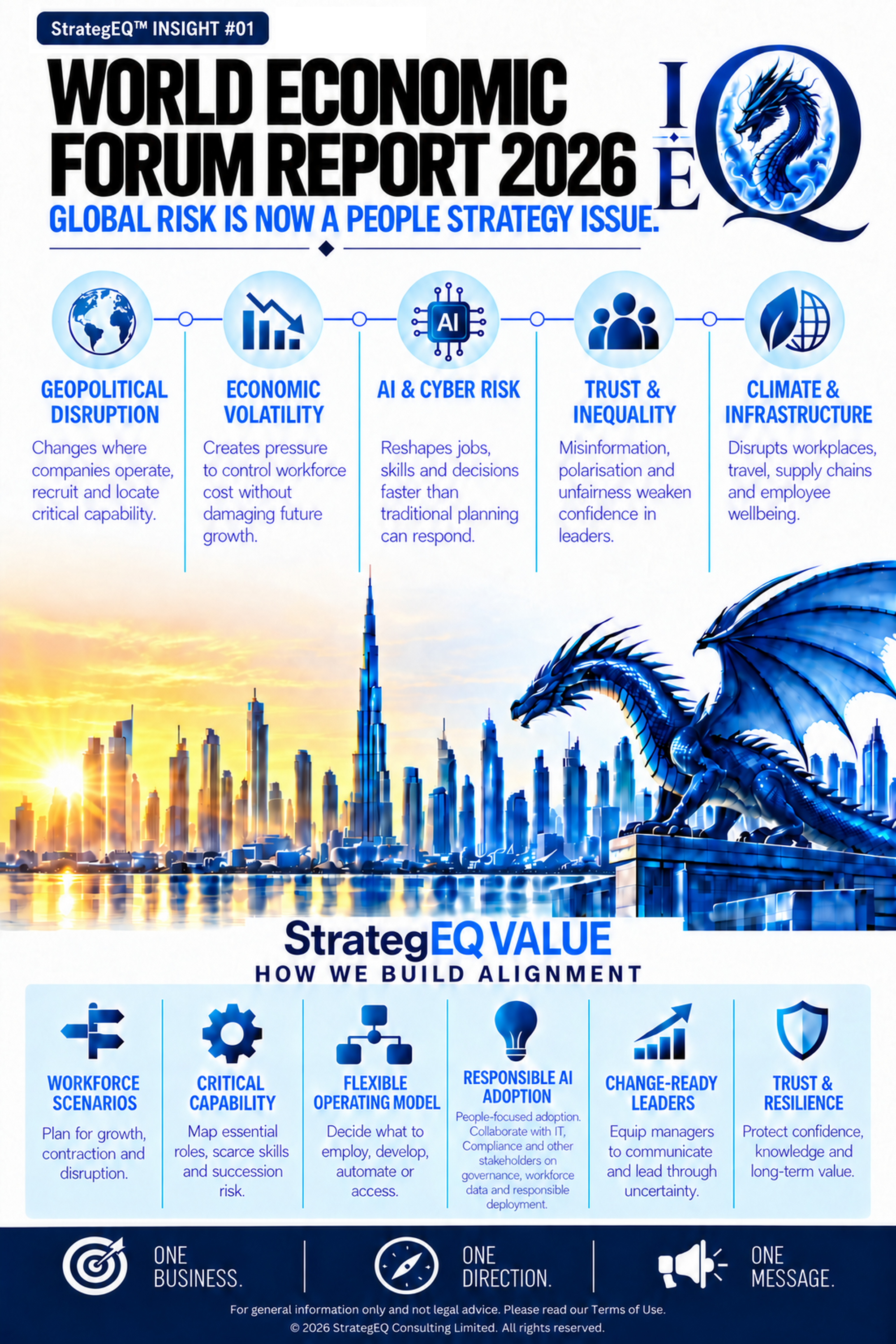
The World Economic Forum Global Risks Report 2026 looks beyond the People function: geopolitical disruption, economic volatility, AI and cyber risk, misinformation, inequality, climate pressure and infrastructure resilience. A founder, CEO or CFO cannot control these conditions. They can examine how exposed the business would be if one of them changed its operating assumptions.
I am not a technologist, economist or climate specialist. I have spent two decades building and scaling teams. From that perspective, external risks become tangible business questions. Can we still serve customers if a location or supplier is disrupted? Which skills could become scarce? What would slower growth mean for hiring commitments? Which activities could AI change, and who would remain accountable for the decisions?
A fixed headcount plan gives only one answer. Leadership teams need a few credible scenarios, with the cost and capability implications of each. Identify roles essential to revenue, delivery and continuity. Examine dependence on one founder, specialist, manager, location or system. Decide which capabilities to build internally, recruit, access through partners or automate. Give managers the information and capacity to explain change and maintain delivery.
Responsible AI requires a joined-up decision. People can assess job design, skills, consultation, adoption and workforce data alongside IT, Compliance and other stakeholders who own technology and governance. That avoids treating either the technology or its effect on employees in isolation.
This work should lead to choices: which capability to protect, which investments to bring forward and who owns the response when assumptions change. Leaders can then act before urgency removes options.
StrategEQ Value
Critical capability mapping and change-ready leadership.