
Approx. 3-minute read
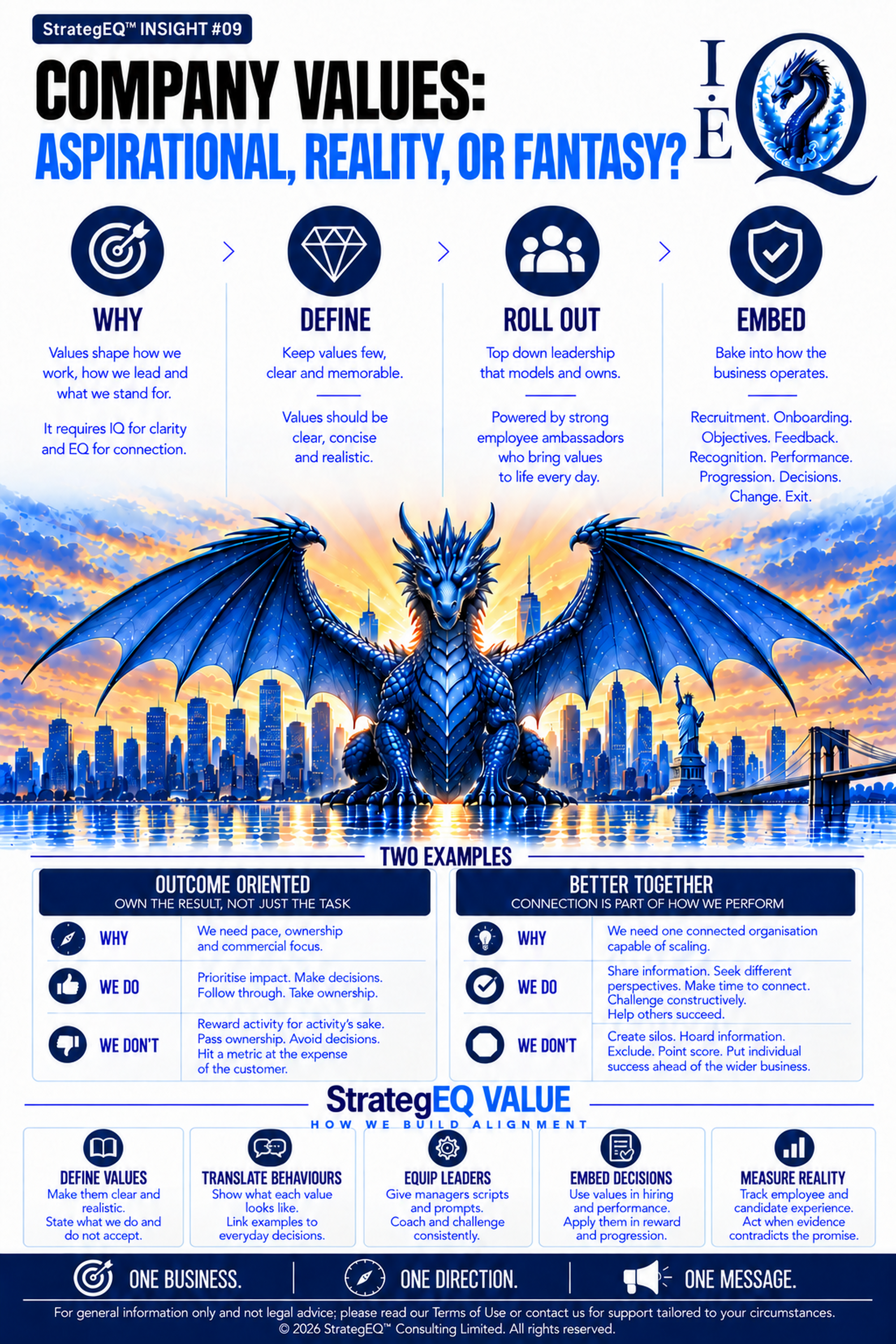
TL;DR: Values create commercial value when they guide decisions under pressure. If they have no effect on hiring, leadership, reward or accountability, they are branding copy.
Values are tested as a company moves from founder-led decisions to teams, managers and contractual commitments. A choice that helped win a deal at 15 employees may damage margin or delivery at 75. The useful test is what leaders decide under pressure.
I like a simple model for making values usable: define the behaviour, name its opposite and show how both appear in daily work.
Ownership
What we do: Own the outcome and flag a commercial risk or opportunity while the company can still act on it.
What we do not do: Leave a missed target for the founder or another function to discover and repair.
How this converts in our working environment: As founder-led delivery becomes a team operation, Sales owns the accuracy of its forecast; Customer Success flags a renewal at risk early; Engineering owns a release milestone and recovery plan; Finance shows the cash effect of a slipped invoice. The company can then act before revenue or runway is lost.
Collaboration
What we do: Make decisions with the functions that carry the delivery and cost consequences.
What we do not do: Book revenue on a promise another team cannot deliver profitably.
How this converts in our working environment: As the company pursues larger contracts, Sales tests scope with Customer Success; Engineering confirms capacity and dependencies; Finance checks margin and payment terms. They agree a viable offer before signing, protecting revenue quality and avoiding costly rework.
Customer focus
What we do: Protect the customer relationship over the full contract, including renewal and expansion.
What we do not do: Win a quarter by hiding a service gap that will put next year’s revenue at risk.
How this converts in our working environment: At scale, Sales sells the outcome the product can deliver; Customer Success uses adoption and complaints to identify churn risk; Engineering prioritises a recurring defect by customer impact; Finance corrects billing friction. The result should be stronger retention and lifetime value, not a short-lived sales win.
Test reality through deal quality, handover failures, renewals, regrettable turnover and what leaders reward. Ask for examples where a value changed a decision. If it never does, it is not yet operating as a standard.
Values can be aspirational. Name the gap, choose a visible decision to change and give managers the authority to apply the standard consistently.
StrategEQ links values to the commercial choices leaders make as the company grows, so behaviour supports execution rather than undermining it.
StrategEQ Value
Values translated into observable decisions and consistent leadership behaviour.