
Approx. 2-minute read
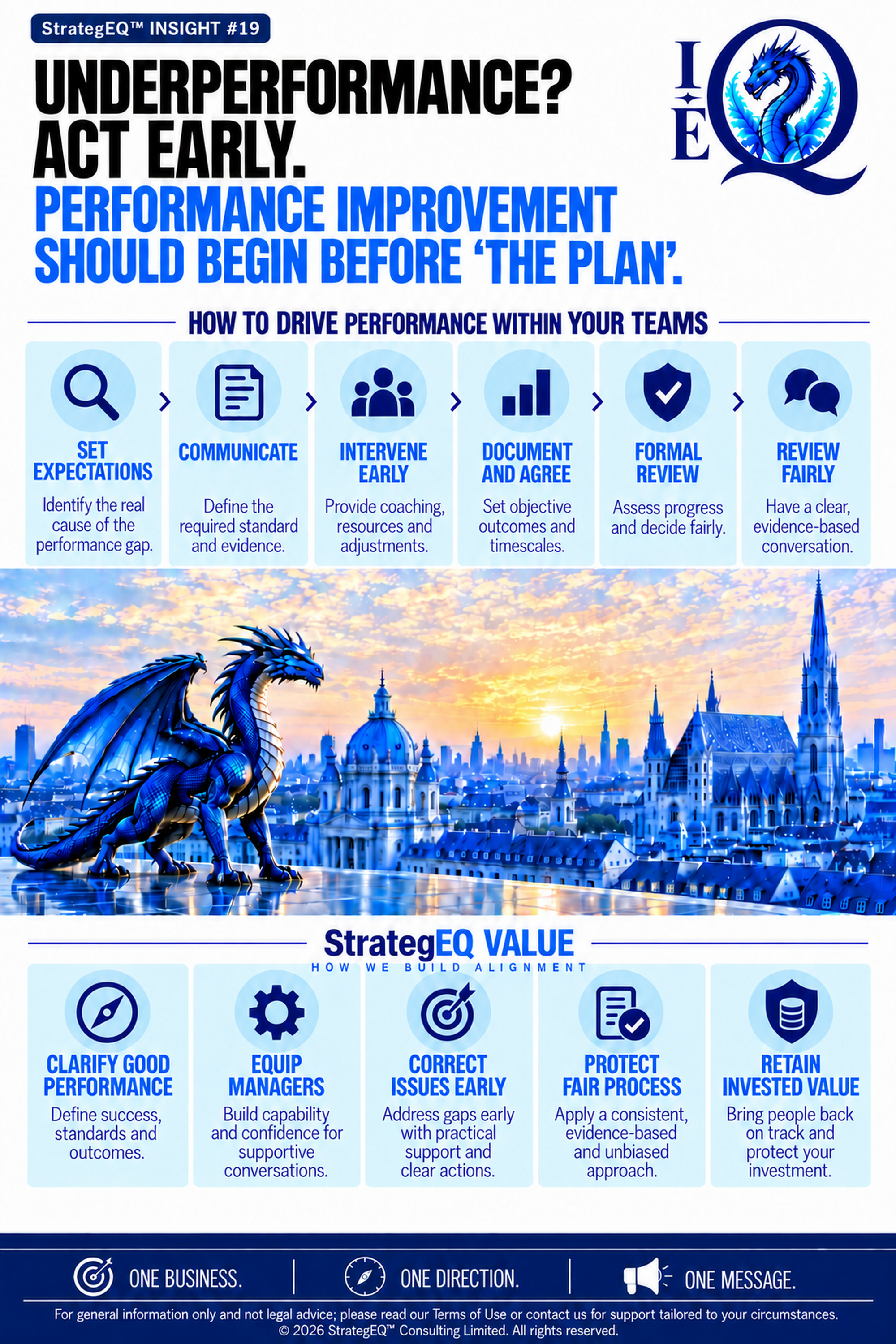
TL;DR: Performance management should protect delivery by making expectations clear, identifying problems early and enabling a fair decision about what happens next.
A company pays for a role because it needs an outcome. When that outcome is unclear, both employee and manager can work hard without delivering what the business needs. When a performance gap becomes visible, early corrective intervention is usually the fastest route back to productivity: clarify the expectation, identify the barrier, give specific feedback and agree a short review point. That can avoid rework, pressure on colleagues and the expense of a prolonged problem. Behavioural concerns should also be addressed promptly, but the response may require different evidence and action; strong output does not excuse conduct that harms others.
Begin with the role’s contribution to the business plan. Define a small number of measurable outcomes and observable behaviours. Set milestones that reflect the work itself, including onboarding and any relevant commercial dates. Give feedback near those milestones rather than saving it for probation or an annual review. If a hire has a recruiter rebate period, for example, concerns need to surface while management still has choices.
Diagnose the gap before prescribing the response. Is the employee missing a skill? Is the workload unrealistic? Are priorities changing without explanation? Is a system or management barrier preventing delivery? Is conduct damaging others despite acceptable output? The answer determines the right support, adjustment, coaching or formal action.
Agree what improvement looks like, what help the company will provide and when progress will be checked. Keep evidence specific and the employee informed. A performance improvement plan may be appropriate when an informal response has not worked or the gap requires a more structured decision, but it is a tool within management, not a substitute for it.
Track the business result: quality, productivity, customer impact, delivery dates, time to competence and avoidable rework. Track the pattern as well as the individual case. If performance concerns recur in the same role, team or under the same manager, test the role design, hiring criteria, recruitment assessment, onboarding, workload, leadership and consistency of expectations. A repeated “employee problem” can signal a system that is setting people up to fail. StrategEQ helps leaders intervene early, support improvement and make fair, timely decisions when it does not happen.
StrategEQ Value
Clear expectations and early manager action that improve delivery and reduce avoidable rework.