Approx. 2-minute read
TL;DR: Managing a team is a different job from being its best specialist or the first person who joined that function. The transition succeeds when the company defines the role, creates capacity and supports the new manager to deliver through others.
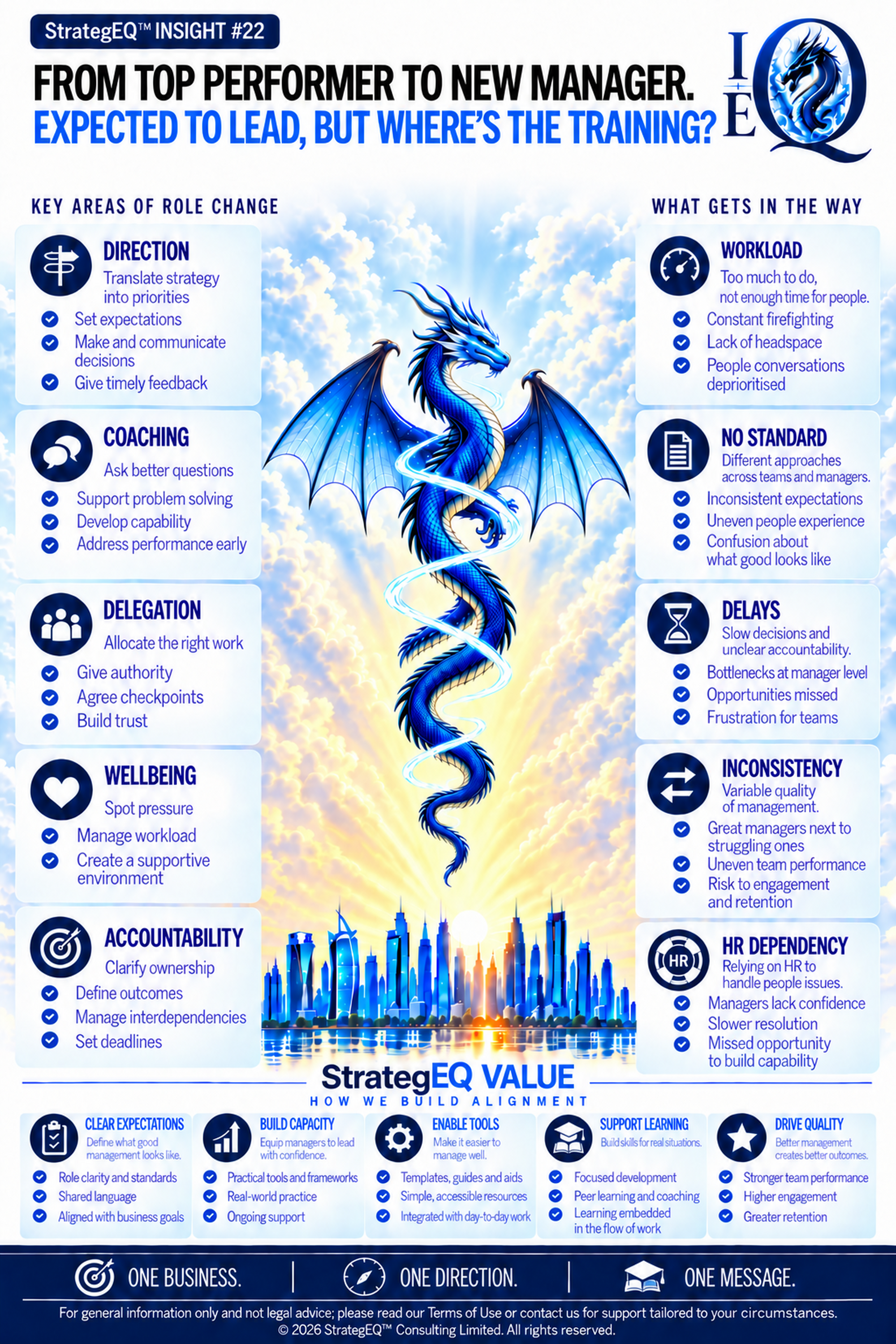
Promotion is often used to reward technical excellence or to recognise the person who was first to join a function. Neither makes someone ready to lead. An excellent specialist or early employee may have little experience of delegation, feedback, hiring, conflict or performance management. If they retain their full individual workload, the new responsibilities are squeezed between familiar tasks. One-to-ones move, decisions queue and problems are addressed only after delivery or retention suffers.
There is a clear commercial cost. The company may lose specialist output without gaining effective team leadership. Other employees wait for decisions or carry unresolved work. A preventable resignation or poor hire can then absorb management time and recruitment spend.
Define the manager’s job in business terms: the outcomes their team must deliver, the decisions they own and the standards of behaviour they must uphold. Rebalance workload so there is time to manage. Give practical support for setting priorities, delegating, reviewing objectives, coaching, handling absence and addressing concerns early. Training should be available close to the point of need, with a route to test difficult decisions before they escalate.
Senior leaders must reinforce the standard. If they cancel one-to-ones, excuse harmful behaviour from high performers or bypass managers, the framework will fail. Assess managers through evidence of team delivery, employee experience, regrettable attrition and the timeliness and quality of decisions, interpreted in context.
Not every strong specialist wants to lead people. A credible expert path protects valuable capability and makes management an intentional choice. StrategEQ helps set the manager standard, align workload and authority, and build the support that lets team performance grow beyond the founder or a handful of experienced individuals.
StrategEQ Value
Manager standards, capacity and coaching that turn individual expertise into stronger team performance.