Approx. 3-minute read
TL;DR: AI can make high-volume recruitment faster, but a faster rejection is not a better hiring decision. Automate repeatable and templated processes; keep the role definition, meaningful human judgement and accountability with people.
A growing company needs people who can deliver the next stage of its plan. Every unfilled critical role can delay work, while a poor appointment consumes salary, management time and another recruitment cycle. AI can help with volume, such as drafting adverts, scheduling, answering routine questions and organising applications. It can also scale an unclear job brief or an unfair screening assumption to thousands of candidates.
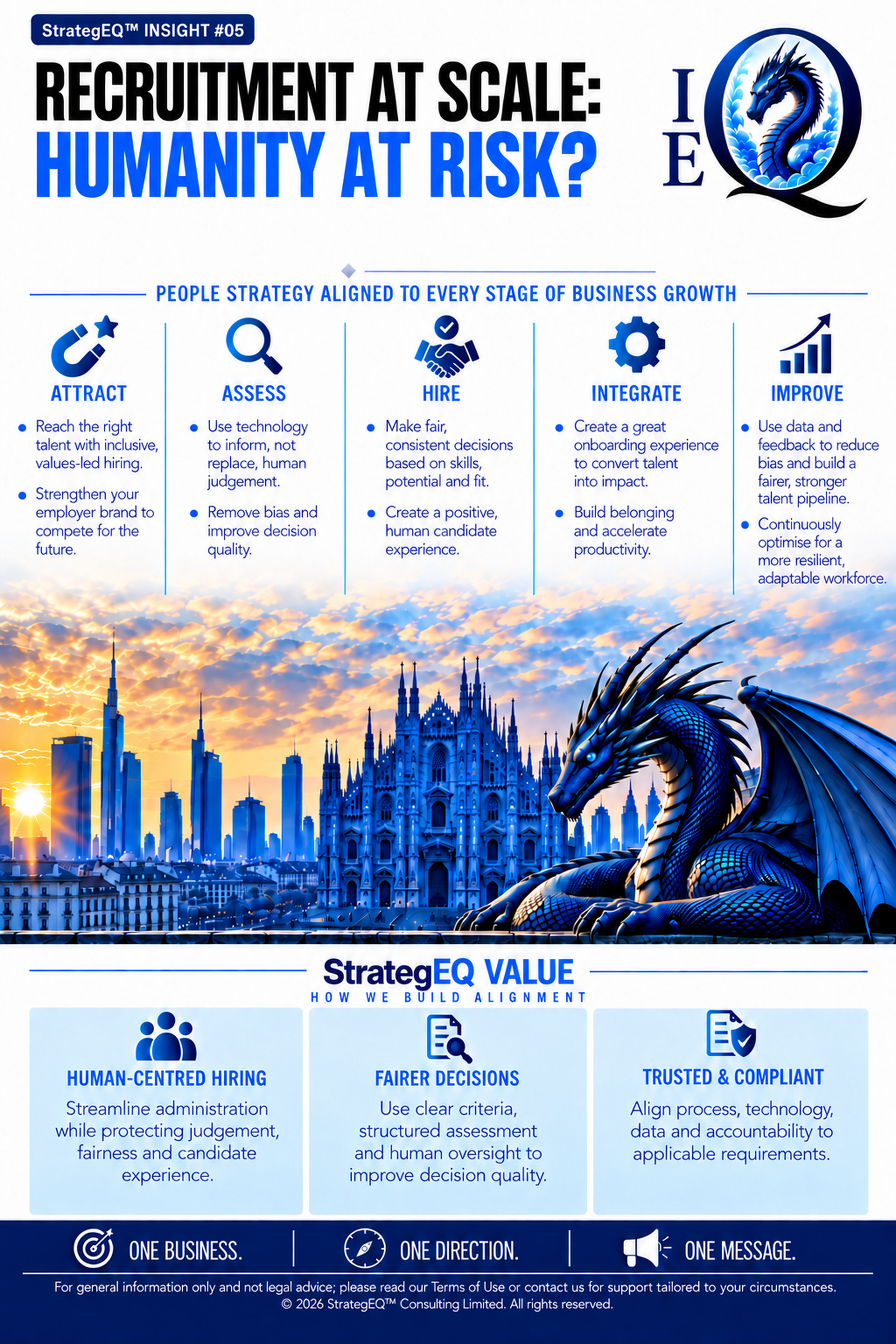
Start with the business outcome, then define essential capabilities and what evidence would show them. Give interviewers a consistent structure and scorecard. “Automate repeatable and templated processes”, not “judgement”: use technology to reduce administrative friction and help recruiters review information, while a trained person examines context, transferable skills and potential before a consequential decision. A token human approval of a machine-generated ranking is not meaningful review.
Before buying or deploying an AI screening tool, the employer should work with its data protection, technology and People leads to assess risk. The ICO advises a data protection impact assessment at procurement stage, a documented lawful basis for processing candidate data and clear contractual roles and instructions for any provider. Ask what information the tool collects, whether sensitive data is involved, how long records are kept, whether data is reused for model training and how the provider tests accuracy and bias. Collect only what is necessary for the hiring purpose and set a defensible retention period.
Candidate transparency is part of the process. Explain in accessible language where AI or automated decisions are used, what data is processed and how an applicant can challenge a significant decision and seek human review. Test outputs before launch and regularly afterwards for accuracy, bias and candidates incorrectly filtered out. The Data (Use and Access) Act 2025 changed the UK rules for solely automated significant decisions; it did not remove the need for safeguards. Requirements depend on the decision and data involved, so the implementation should be checked with data protection and legal specialists.
Judge the result beyond vacancies filled. Track candidate drop-off, time and cost to hire, diversity and fairness signals, early attrition, manager satisfaction and time to competence. If the job design or onboarding is weak, a new model will not make the hire successful. The goal is faster productive capacity with decisions the company can explain and defend.
StrategEQ Value
A repeatable hiring process that reduces administration, protects candidate data and keeps meaningful judgement with accountable people.