
Approx. 3-minute read
TL;DR: Preventing sexual harassment is a leadership and operational risk responsibility. A policy is only one part of a credible prevention system.
For a founder, CEO or CFO, the cost of getting this wrong extends beyond a claim. It can include loss of key employees, disruption to teams, senior management time and damaged client relationships. Colleagues may lose confidence that concerns will be taken seriously, while customers, candidates and investors may question the company’s judgement. Internal trust and external reputation can both suffer. Describing unwanted conduct as “banter” does not settle how it was experienced or whether the company responded appropriately.
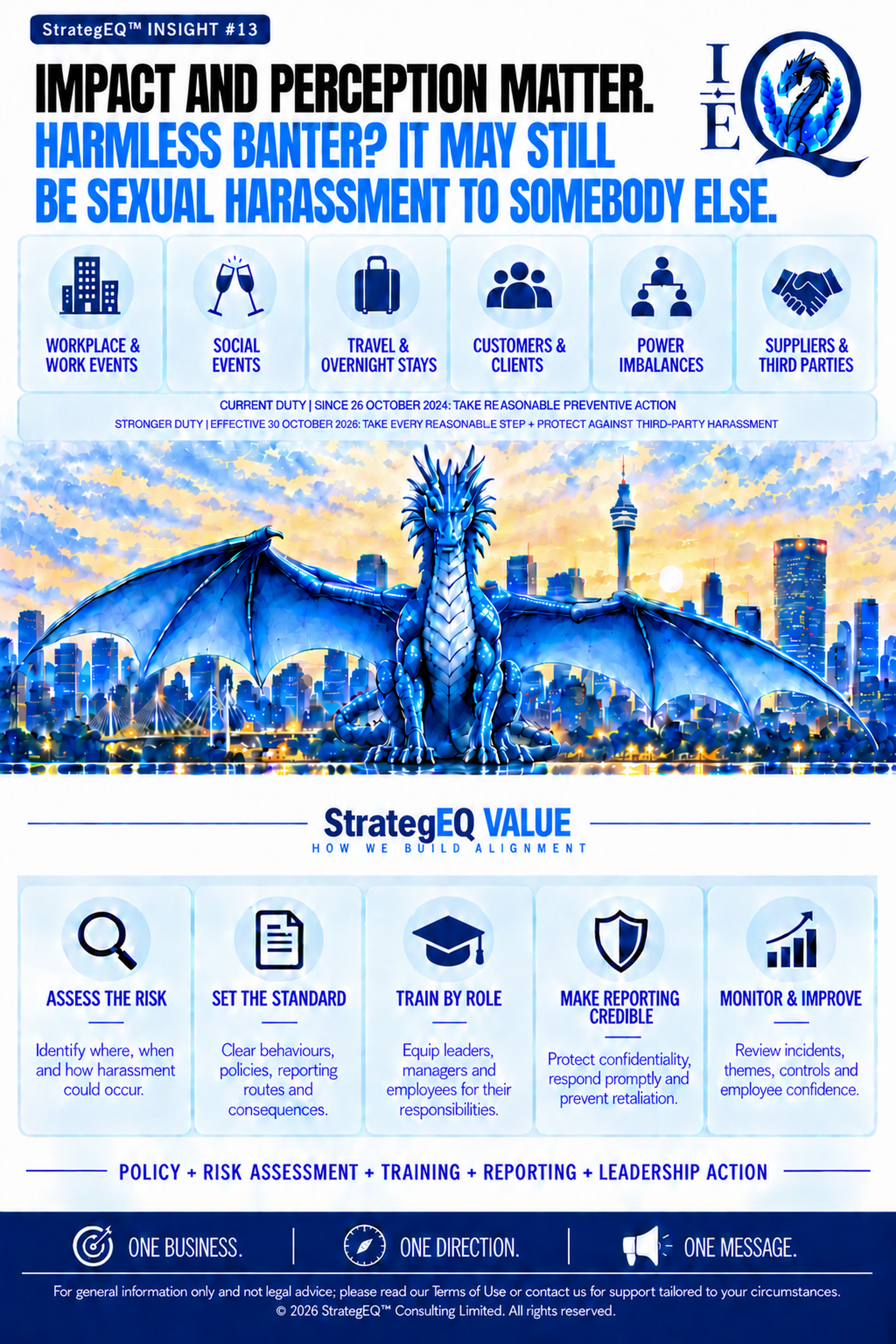
UK employers have had a duty to take reasonable steps to prevent sexual harassment since October 2024. From 30 October 2026, the requirement is due to become all reasonable steps, alongside a new obligation concerning harassment by third parties such as customers and clients. “Reasonable steps” means practical preventative measures suited to the risks and circumstances of the employer; it is not permission to stop after taking one convenient step. “All reasonable steps” requires the employer to consider and take the full range of measures that are reasonable in its circumstances. There is no universal checklist or requirement to take measures that would not be reasonable, but the employer should be able to explain why it chose its controls and how it tests them. These are the harassment terms; “reasonable adjustments” is a separate disability law duty.
A policy is necessary, but it cannot substitute for assessing where harassment could actually occur. Map the specific scenarios: power imbalances, lone working, customer-facing roles, business travel, conferences, work socials, alcohol, messaging channels, remote work and workplaces controlled by clients or suppliers. Consider both colleague-to-colleague and third-party conduct. Assess who is exposed, the nature of the risk and what would reduce it. Give each control an owner and review it when the business, location or working pattern changes. A policy should set behavioural standards, explain confidential reporting and what happens after a report, and offer an alternative to the direct manager when that person is involved or the reporting line creates a conflict. Support it with realistic training, manager intervention and credible routes for escalation.
When a concern arises, listen, protect the people involved, preserve relevant evidence, investigate fairly and act without retaliation. Review complaints, exits, survey findings and other signals for patterns, including areas where low reporting may reflect lack of confidence rather than absence of risk. Reassess after expansion into new locations, customers or ways of working.
StrategEQ can help leadership teams identify material exposure, assign practical controls and test whether prevention works in everyday operations. That protects employees while reducing avoidable cost, interruption and reputational harm.
StrategEQ Value
Practical prevention, reporting and intervention that protect employees and reduce avoidable disruption.
Sources
- Acas, Preventing sexual harassment and Employment Rights Act 2025 guidance
- UK Government, Workplace sexual harassment and third-party harassment